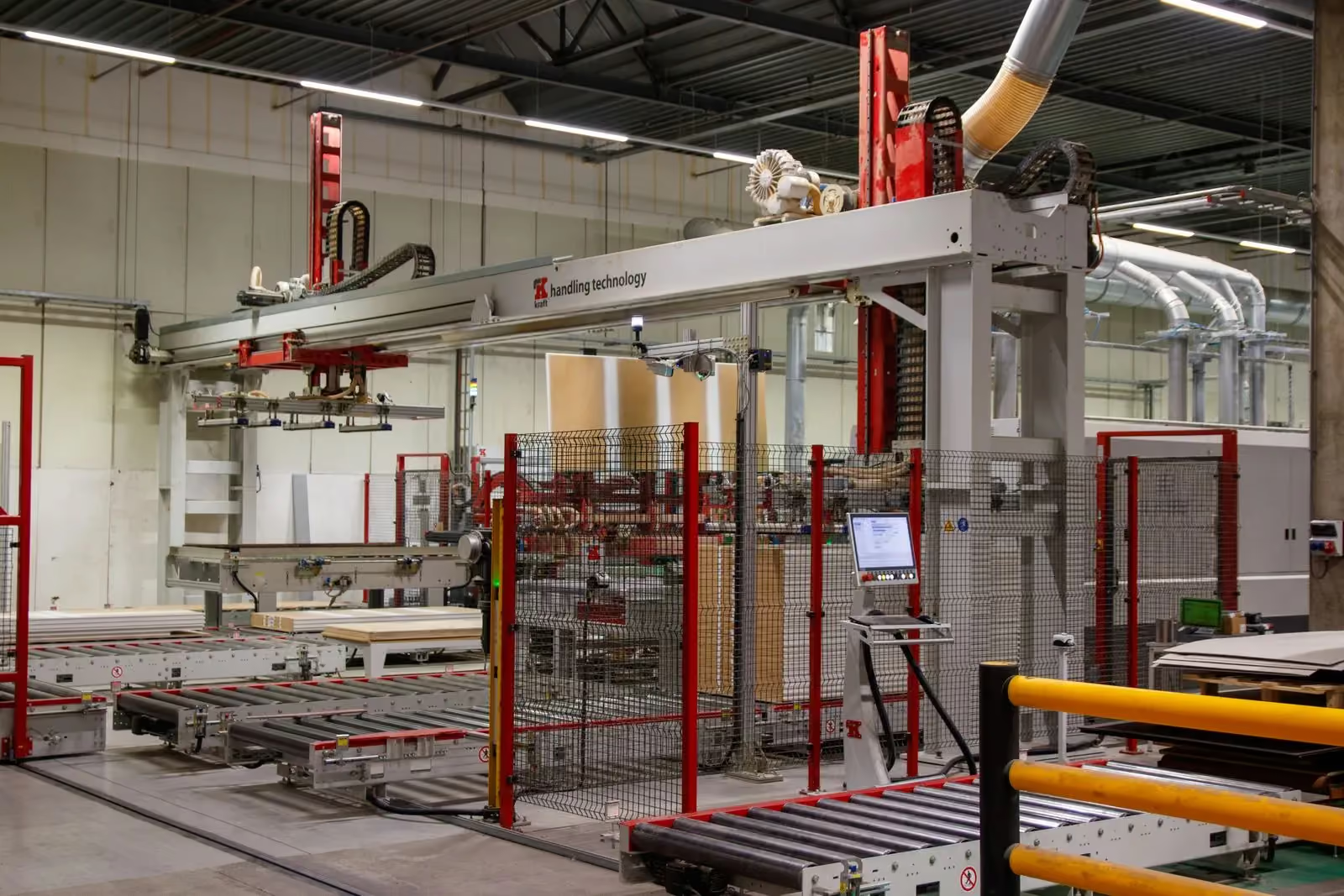
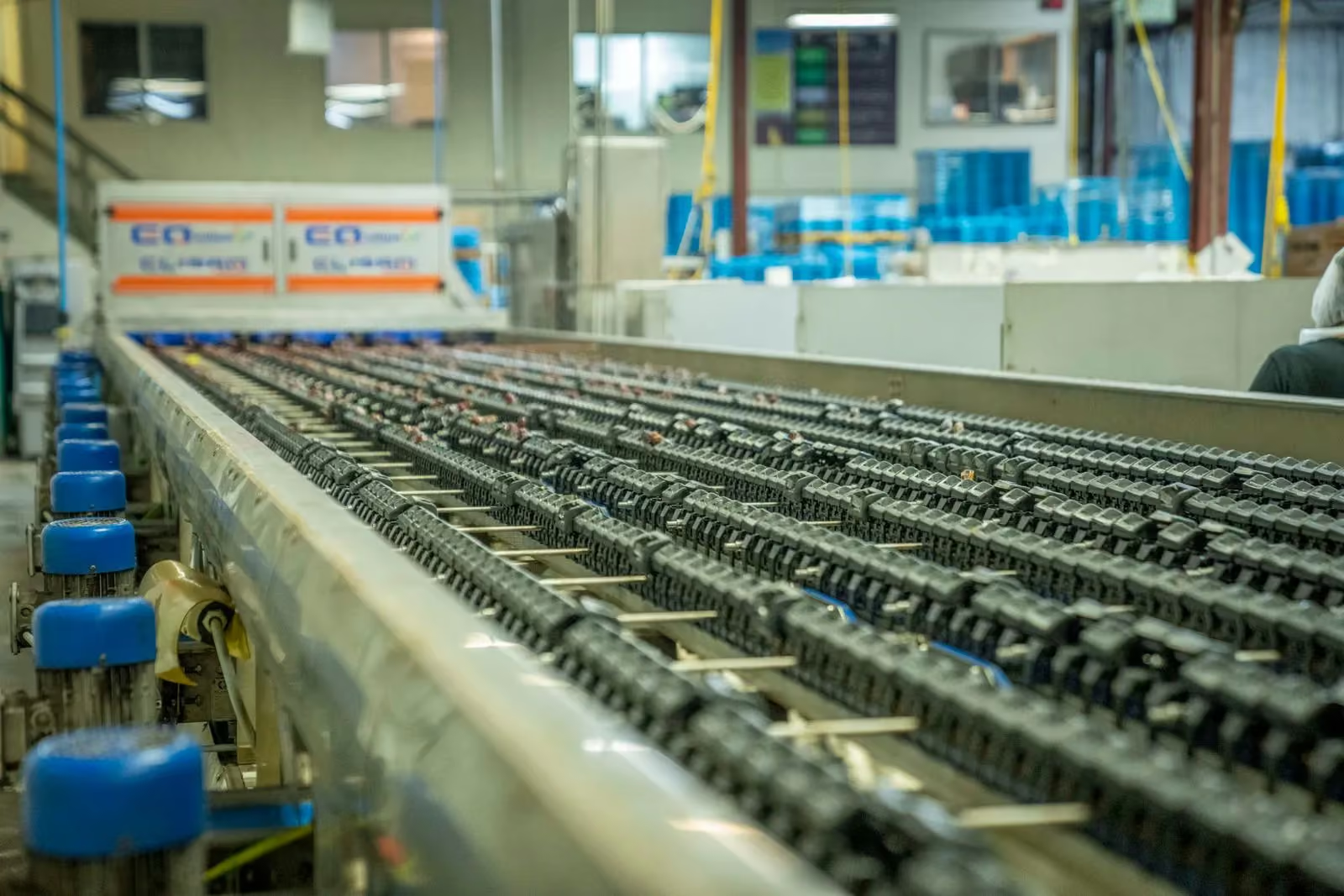
Transfer between stations, with buffering and indexing built in. It moves work through the cell at the rate the slowest station can take, and holds it when that station stops.
Rail is what keeps a good cell from starving the station after it, or jamming the one before.
Length, pitch and carrier count come from the cycle times either side of it. A rail longer than the buffer needs only costs floor space.
Specification
Each carrier takes up to 25 kg. Index time between stations is under 0.8 seconds, and the stop position repeats to ±0.5 mm, which is what the downstream tooling needs in order to find the part.
Length and pitch are cut to the cell. There is no standard module you have to design around.
How much it buffers
Carriers hold between stations, so a stoppage downstream does not immediately starve the one upstream. How many the rail holds is calculated from the cycle times you give us, and the figure is written on the drawing.
Integration
The rail ties into the cell's safety circuit rather than sitting beside it, so a stop anywhere brings the transfer down with the station. Position and presence report on the same IO as the rest of the cell.
Where an existing conveyor stays in service, we match its height and hand-off instead of asking you to move it.
Direction, height and hand-off are surveyed on site before the rail is cut. What arrives fits the gap that was measured.
Service
Belts, rollers and carrier pads are the wear items, all standard parts held in stock. A carrier can be pulled and replaced without breaking the line.
Drive units are sealed and rated for continuous shifts, with the service interval written into the handover pack.
Those intervals are set from the duty the rail actually runs, not from a generic table. Nothing on the schedule needs the line down for longer than a shift change.
.svg)
.svg)
.svg)


.svg)


.svg)
.svg)
.svg)
.svg)
.svg)
.svg)
.svg)