Ready to automate your workflow?
Built for Your Unique Workflow
.svg)

.svg)
.svg)
Some parts do not fit anything on a catalogue page. They are too thin, too soft, still warm from the last process, or they arrive in six variants that all have to pass through the same station.
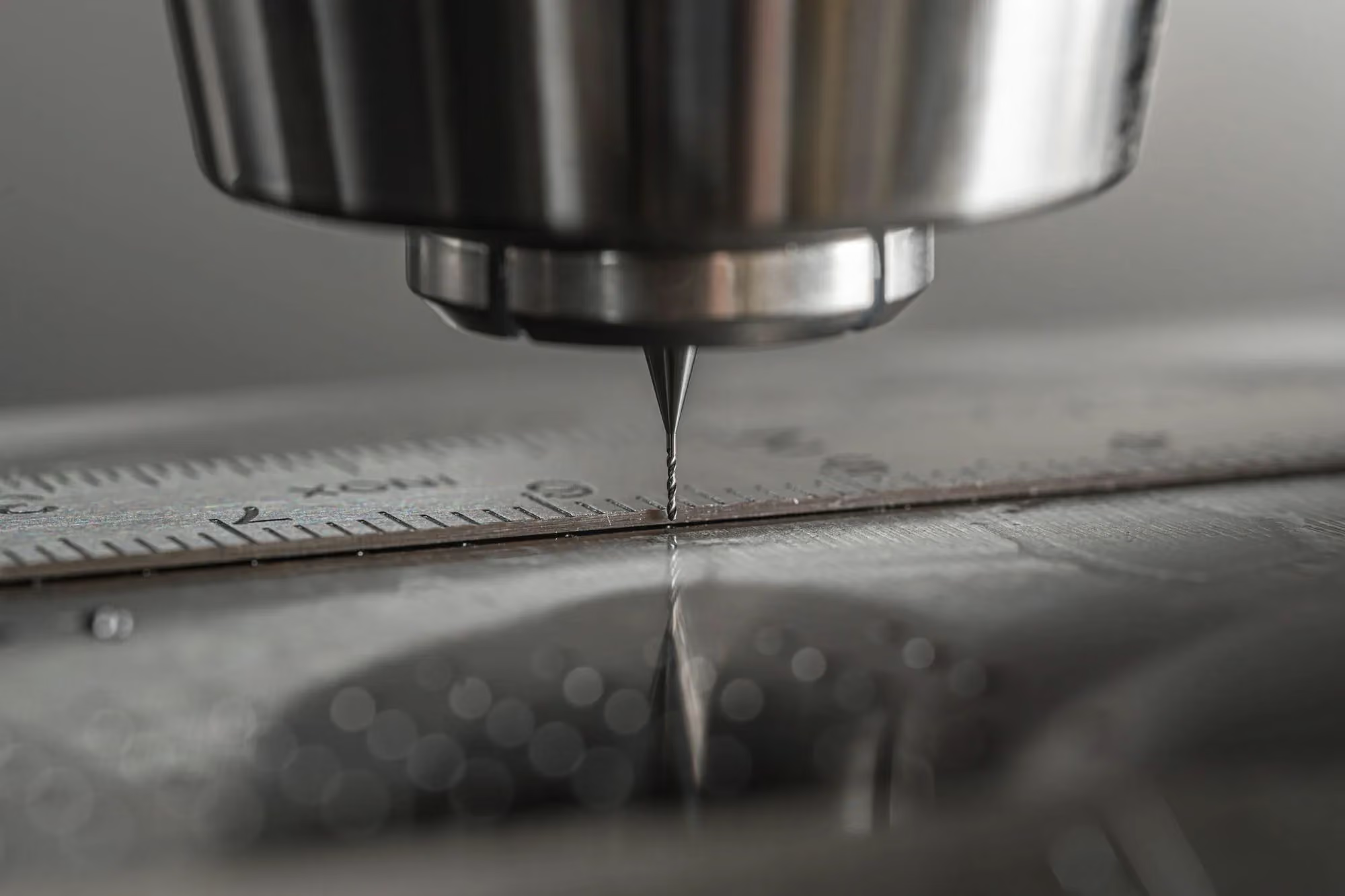
Custom tooling starts from that part. We draw the jaws to its geometry, choose contact materials that will not mark the finish, and cut to the tolerance band your inspection actually uses.
Custom does not have to mean slow or unrepeatable. Around two thirds of what we build is a standard body carrying bespoke contact geometry, which is why a one-off tool still ships in five to eight weeks and still takes spares from stock.
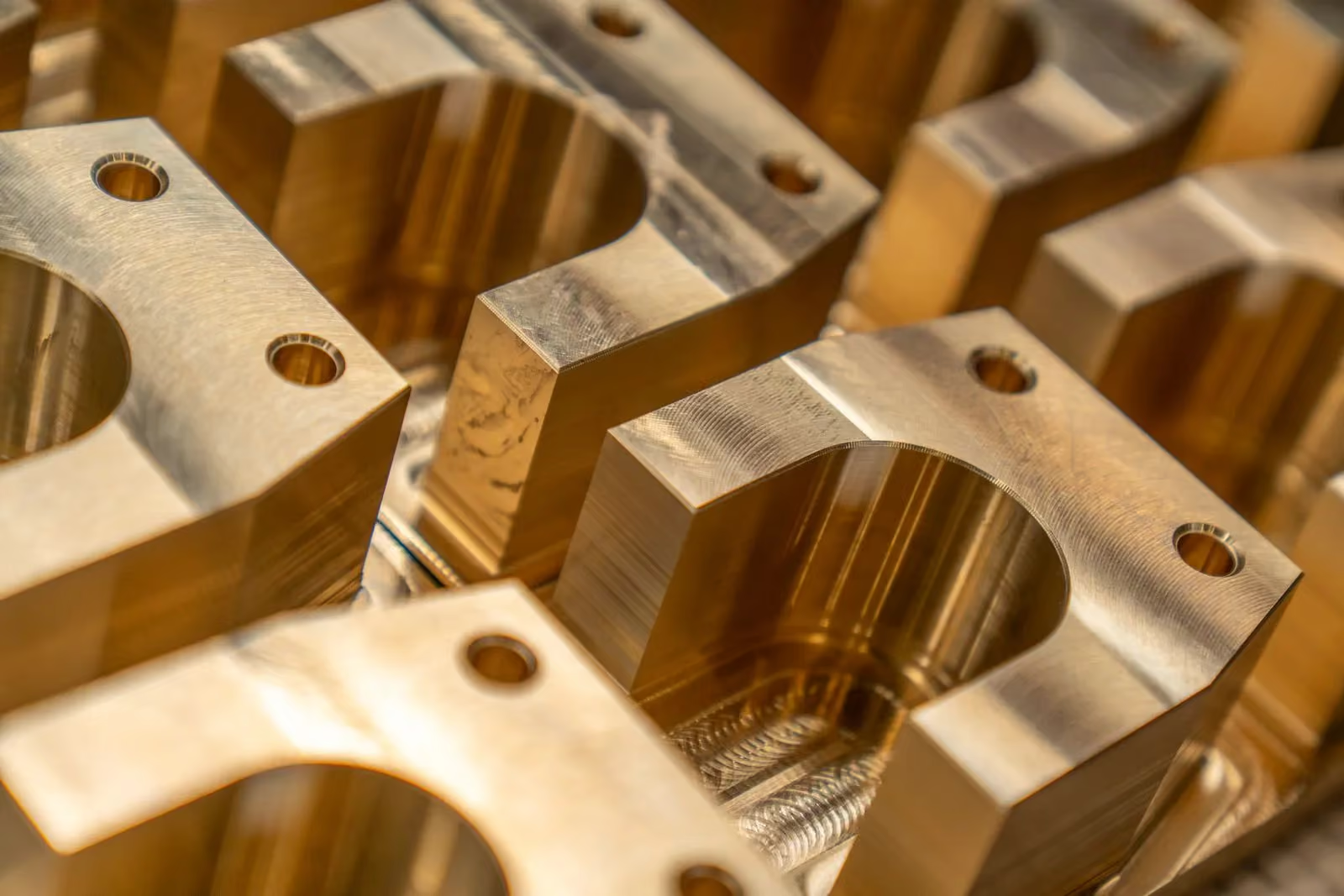
You send a sample or a model, and we work from that. The first version is machined, run on a rig against the real pick, and changed where the rig disagrees with the drawing, which it usually does at least once.
Mixed-part lines get one tool with changeable contact faces rather than six separate tools. Fewer part numbers on the shelf, one set of spares, and a changeover the operator can do without calling a fitter.
Where the part is likely to change again, we design for that and say so in the quote. A jaw cut to this year's geometry is cheap to replace; a tool body that cannot accept next year's is not.
Weight, finish, tolerance and the way the part sits when it reaches the station.
Jaw geometry and fixtures drawn to that part, and to the variants it shares a station with.
Non-marking faces chosen for the finish, replaceable without changing the tool body.
Full drawings and tolerances, so the tool can be re-cut later without coming back to us.
The first tool off the machine measured against the drawing, with the report travelling with it.
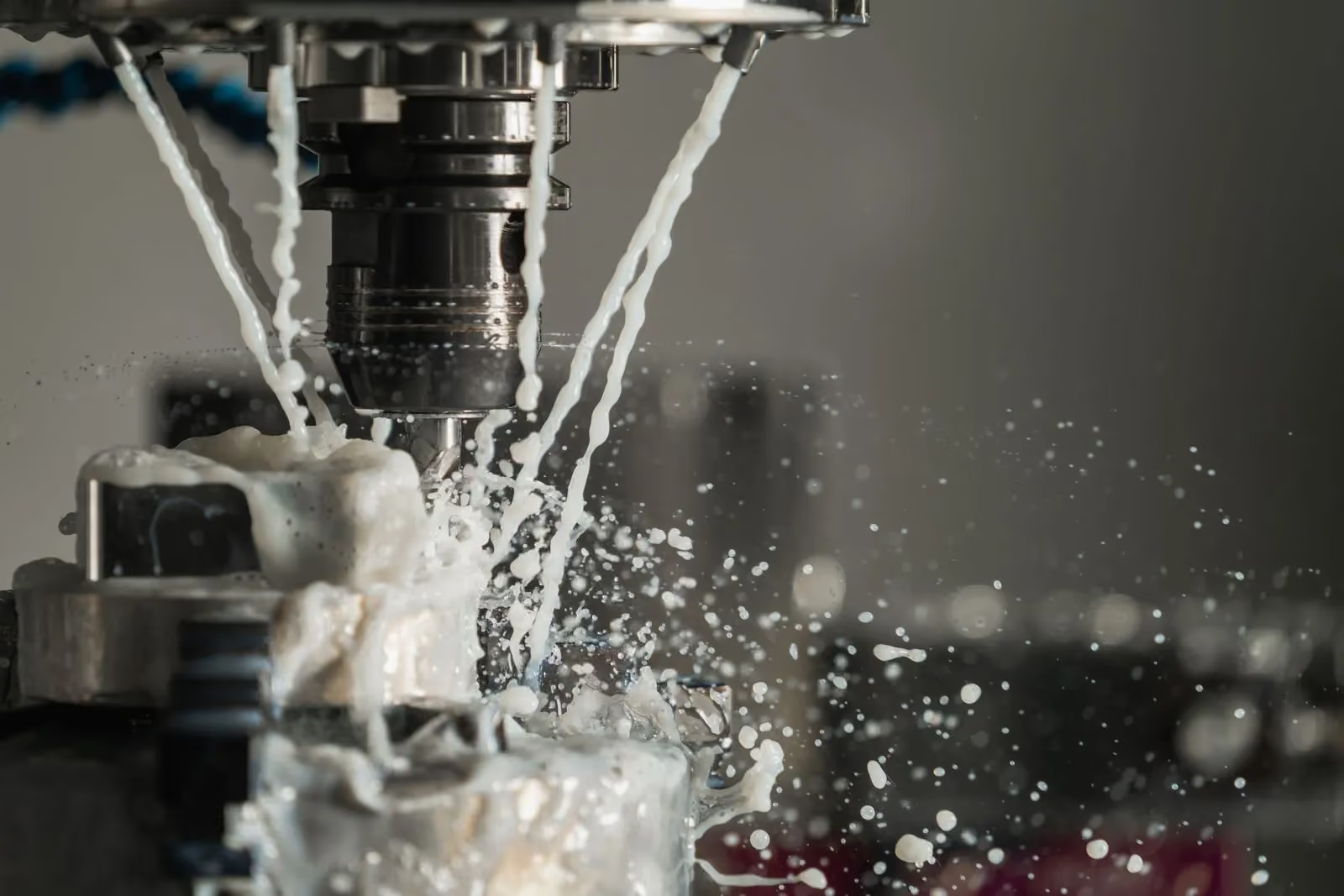
A custom tool is tested against the tolerance your inspection uses, not against a general figure. We run the real part, measure what the tool holds, and ship the measured band alongside the drawings.
Where the part falls under hygiene or wash-down rules, materials and finishes are chosen against those rules and stated on the report, so the tool passes your own audit rather than ours.
Materials are declared, not implied. Every contact face is listed by grade and hardness, so when an auditor asks what actually touches the product, the answer is already written down and does not depend on someone remembering.
What engineers usually ask us before they send a part over.
Is the safety documentation included?
.svg)
What happens after the install?
Can this be fitted to a line that is already running?
What do you need from us before quoting?
Do you work with robots we already own?
How do we know which solution we need?


.svg)
.svg)
.svg)
.svg)
.svg)
.svg)
.svg)