.svg)
.svg)

Ready to automate your workflow?
Every robot cell has guarding, and in almost every plant there is a cell where the guarding has been quietly defeated. A switch taped down, a door wedged open, a panel removed for now and never put back. It is tempting to blame the operators. It is almost always a design problem.
The safest cell is the one where the safe way is also the quickest way to get the work done — and that has to be designed in from the start, not added with a sign afterwards.
Guarding fails at the jam
Most guarding is defeated for one reason: clearing a fault takes too long the proper way. A door that needs a key, a reset sequence and a restart from home position gets propped open within a month, usually by someone under pressure to get the line moving again.
Guarding that slows the job down does not stay in place. It gets taped, wedged or propped.
Put access where the jams are
We ask the people who run the station where it jams, and put the access there. An interlocked hatch beside the fixture beats a full door at the back of the cell, because it is where the operator already needs to be.
Before the fence is drawn, we list:
- where parts jam, and how often;
- where material is topped up;
- where tools are changed or cleaned;
- where people currently walk to reach each of those.
Each of those gets an access point designed for it, not a single door that serves them all badly.
Choose stop categories for the restart
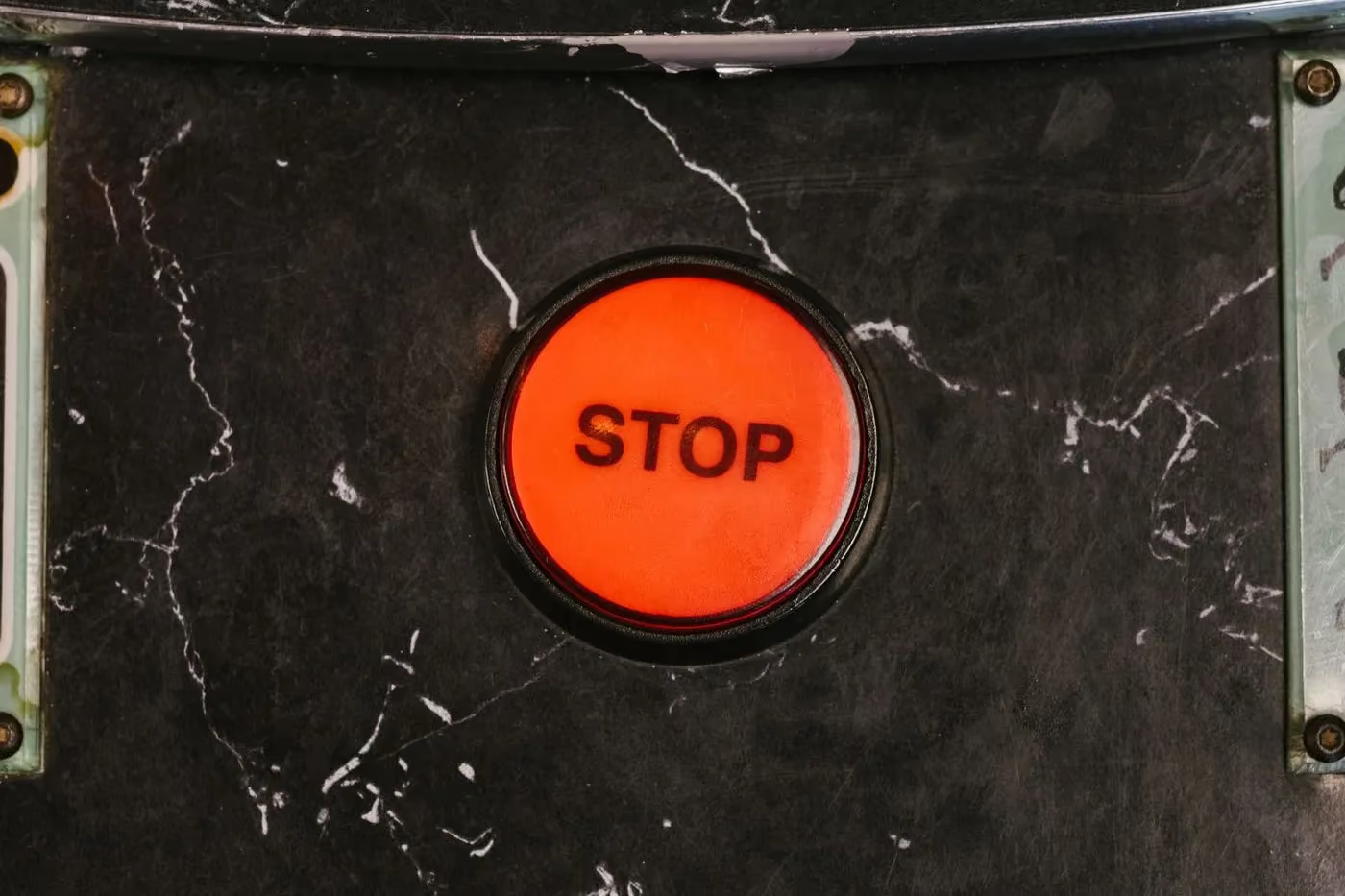
A controlled stop that holds position lets the cell resume where it left off once the hatch closes. An emergency stop that drops everything and demands a full re-home is right for some hazards and wrong for a routine jam.
Matching the stop category to the task means the proper route is quicker than the shortcut — and operators stop looking for one.
Make the safe state obvious
Operators should never have to guess whether it is safe to reach in. A clear signal at every access point — a light that shows the station is stopped and holding — removes the temptation to check by opening the door first.
Check it a month later
We go back after the cell has run for a month. What we look for is simple:
- tape on interlock switches, or magnets holding them closed;
- wedges in doors that should close on their own;
- worn paths to a part of the fence nobody planned an opening in;
- reset sequences operators have learned to shortcut.
Where we find them, the design changes, not the warning sign.
Final thoughts
Guarding works when it follows the work: access where the jams are, stops that restart quickly, a safe state that is obvious and a check a month in. Cells built that way keep their guarding in place, because nobody has a reason to remove it.


.svg)
.svg)
.svg)
.svg)
.svg)
.svg)
.svg)