Ready to automate your workflow?
Solutions Across Every Industry
.svg)

.svg)
.svg)
The same gripper does not survive an assembly line and a wash-down bay. Temperature, dust, hygiene rules and the way parts arrive change what the tooling has to be made of long before they change what it has to do.
We build into five sectors, and each one has its own constraints written into the specification rather than bolted on at the end.
This is not a fifth product sitting alongside the others. It is how a gripper, a cell, a custom tool or a retrofit gets specified once we know which floor it is going to, and it is why one platform can sit in a machining cell and in a chilled packing hall.
An application study comes first. We look at what the line handles, what the tooling is exposed to, and which standard the plant is audited against, then specify materials and sealing from that.
The mechanics may be shared across sectors, but the surfaces, seals and paperwork are not. That is what lets one platform serve a machining cell and a packaging line without either of them being a compromise.
Where a sector has a rule we cannot meet with a stock material, we change the material rather than the claim. That has cost us an order or two. It has not yet cost a customer a failed audit.
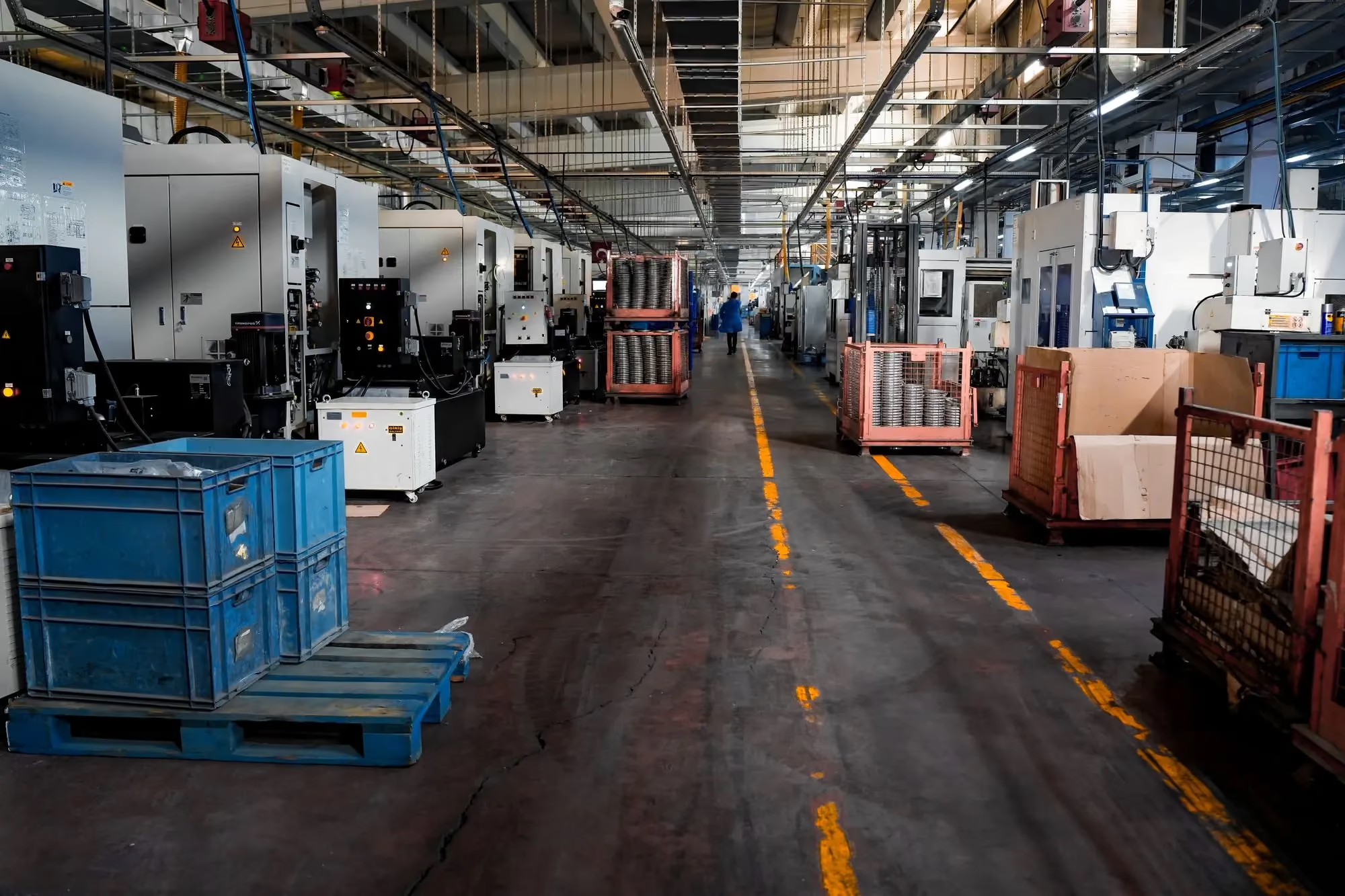
Repeatability first, with tooling built for coolant, swarf and continuous cycling.
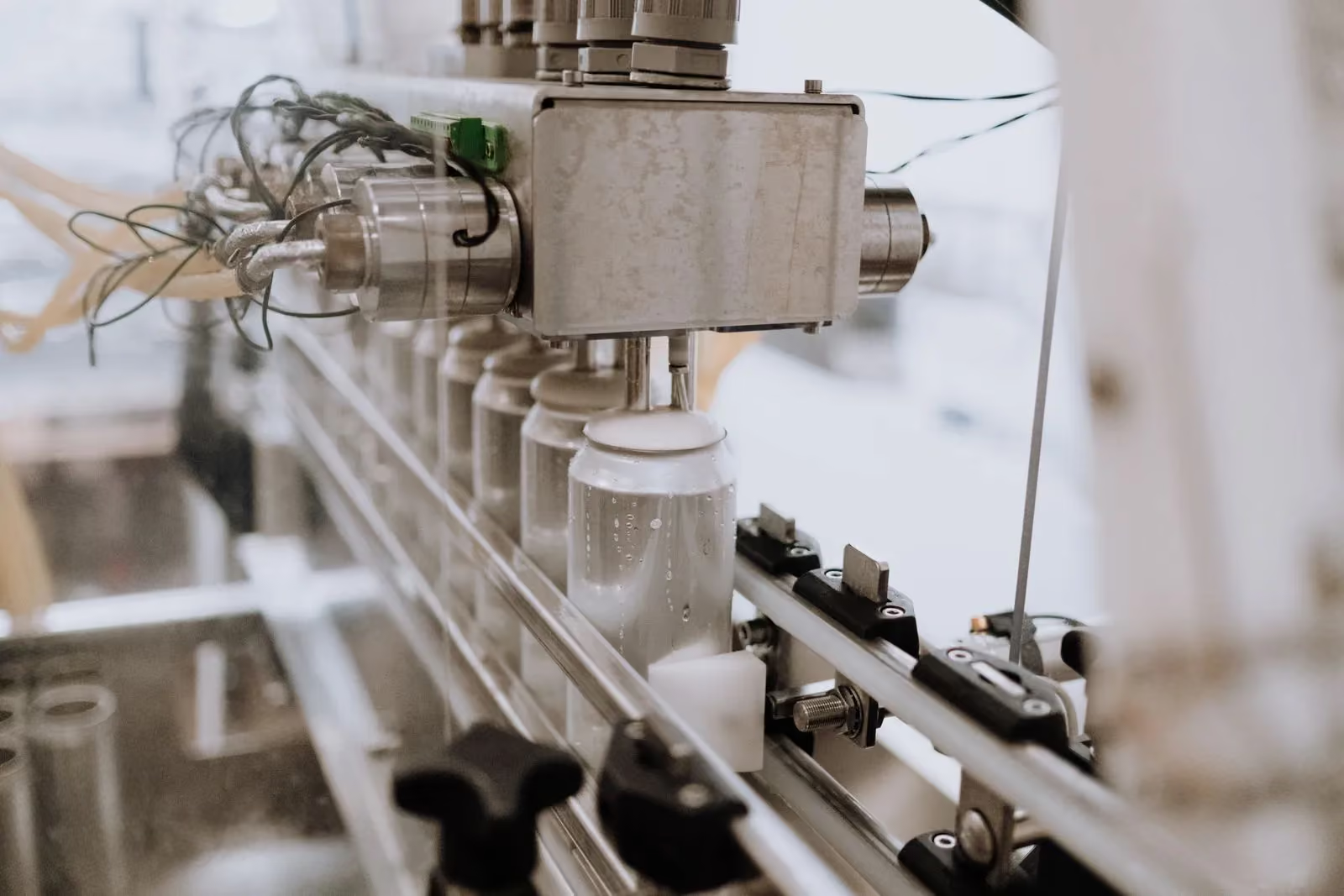
Wash-down rated materials, sealed actuators, and finishes that survive daily cleaning.
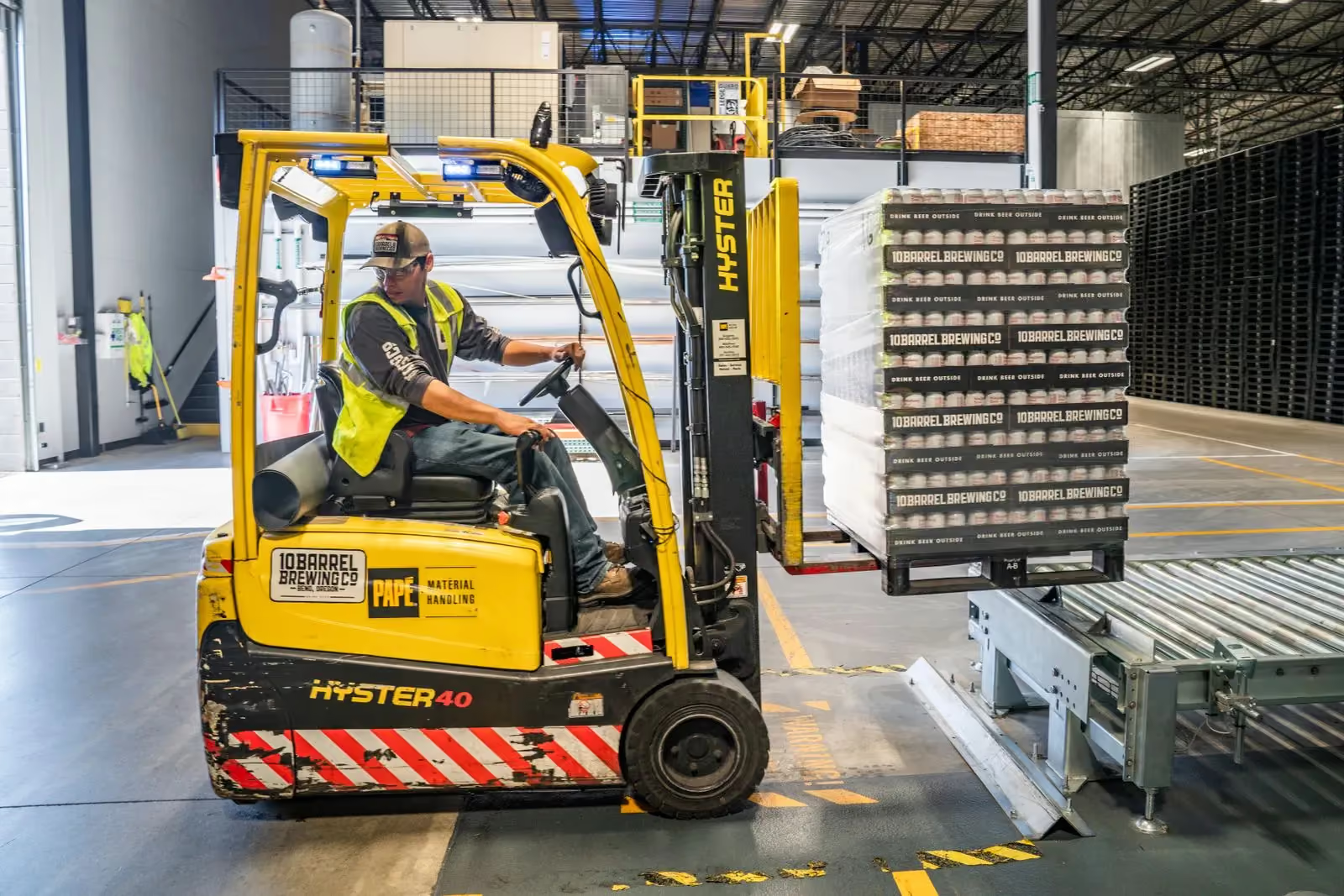
Fast, light tooling for mixed cases, sized for pick rate rather than maximum payload.
Components supplied to your interface and your drawings, badged or unbadged as you prefer.
Low-particulate finishes and lubricant-free actuation where the room carries a classification.
Every build carries the documentation its sector is audited against, prepared during the build rather than assembled afterwards. That means the ISO 10218 file in all cases, and food-contact or wash-down declarations where the line needs them.
If your plant is audited to a standard we have not met before, we will say so at the study stage rather than at delivery.
Sector paperwork follows the unit for its working life, not only to the loading bay. Reissuing it after a repair or a change of material is part of the service agreement rather than a chargeable request.
What engineers usually ask us before they send a part over.
Is the safety documentation included?
.svg)
What happens after the install?
Can this be fitted to a line that is already running?
What do you need from us before quoting?
Do you work with robots we already own?
How do we know which solution we need?


.svg)
.svg)
.svg)
.svg)
.svg)
.svg)
.svg)