Ready to automate your workflow?
Two-finger gripper
ARC Grip X1
A next-gen robotic gripper for precise handling, automation, and integration into production lines.
Up to 50 kg
Payload
5–120 mm
Grip range
< 0.5 s
Cycle time
±0.02 mm
Accuracy

.svg)
.svg)
A next-gen robotic gripper for precise handling, automation, and integration into production lines.
A two-finger parallel gripper for lines that pick the same part thousands of times a shift. The body is sealed, the jaws are cut to your part, and the pair ships as one unit with the numbers it recorded on the rig.
It suits assembly, machine tending and light kitting, where the part is known and the cycle is short. Where the part changes often, the contact faces change rather than the whole tool.
Each unit is built against one part number. If you run a family of parts, we cut a set of faces rather than quoting you a second gripper.
.svg)

Payload runs to 50 kg at the rated pressure, with grip force set per order between 20 and 350 N. Stroke covers 5 to 120 mm across the jaw range, and repeatability holds to ±0.02 mm over a thousand consecutive picks.
A full cycle takes under half a second, measured jaw-closed to jaw-closed on a rig running your part rather than a test block.
The unit weighs 2.4 kg with standard jaws, so it does not eat into the payload the robot has left for the part itself.
Every gripper runs a thousand-cycle test before it is crated. The sheet that ships with it carries that unit's measured grip force, repeatability and cycle time — not the range printed on this page.
The flange follows ISO 9409-1-50, so it bolts to a standard wrist without an adapter. Air enters through two G1/8 ports, and the unit reports open, closed and grip loss on plain digital IO as well as IO-Link.
Nothing in the interface assumes a particular controller. If your line already names its signals, we wire to those names rather than ours.
Commissioning is half a day on a station that is already wired. The signal list goes into your maintenance folder, not only into the manual.
Jaws and contact faces are consumables. A spare set ships in the same crate, and both are replaceable at the station without taking the gripper off the robot.
The actuator behind them is rated for ten million cycles and rebuildable from stock parts. We hold spares for ten years after the last unit of a series ships.
A worn face shows as a dropped part before it shows as damage, which is why grip loss reports on its own output. Most lines set that to stop the station rather than to warn.
Product
Product
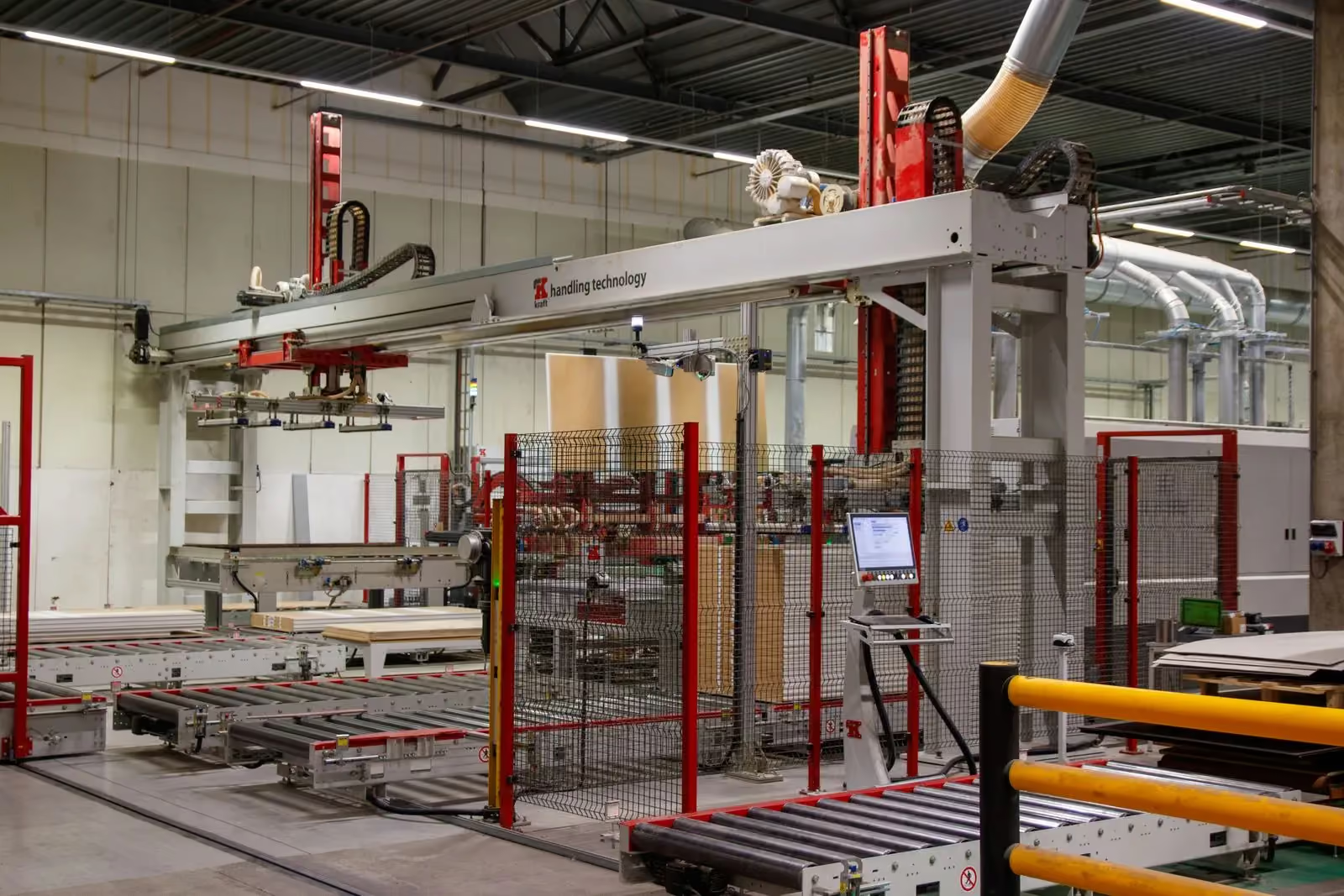
Product
Product
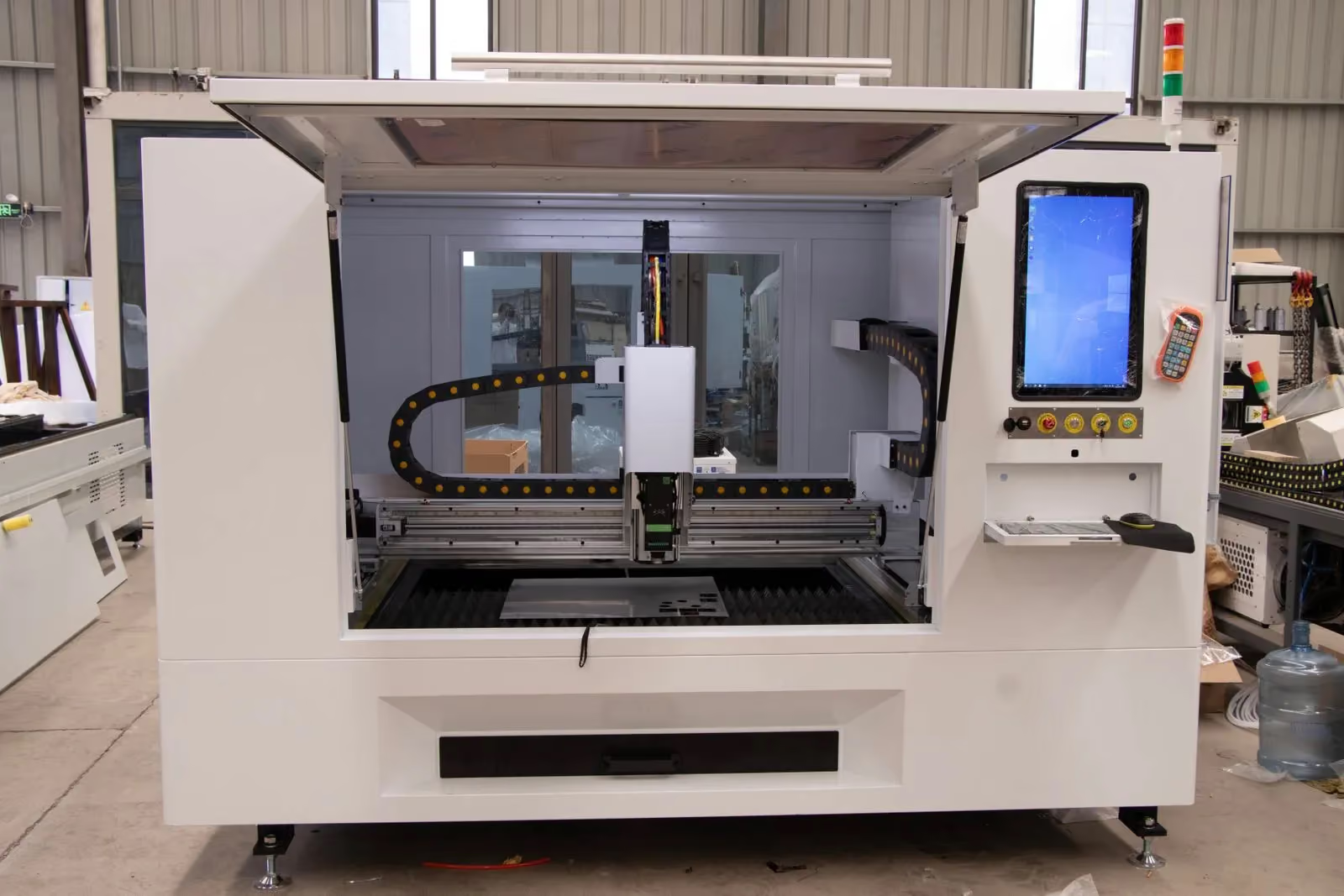
Product
Product
What engineers usually ask before they order a unit.
Are the drawings ours to keep?
.svg)
Will it work with the controller we already have?
Can we specify the mounting flange?
What arrives in the crate?
Do the figures on this page apply to every unit?
Can the jaws be changed for a different part?


.svg)
.svg)
.svg)
.svg)
.svg)
.svg)
.svg)