Ready to automate your workflow?
Seamless System Integrations
.svg)

.svg)
.svg)
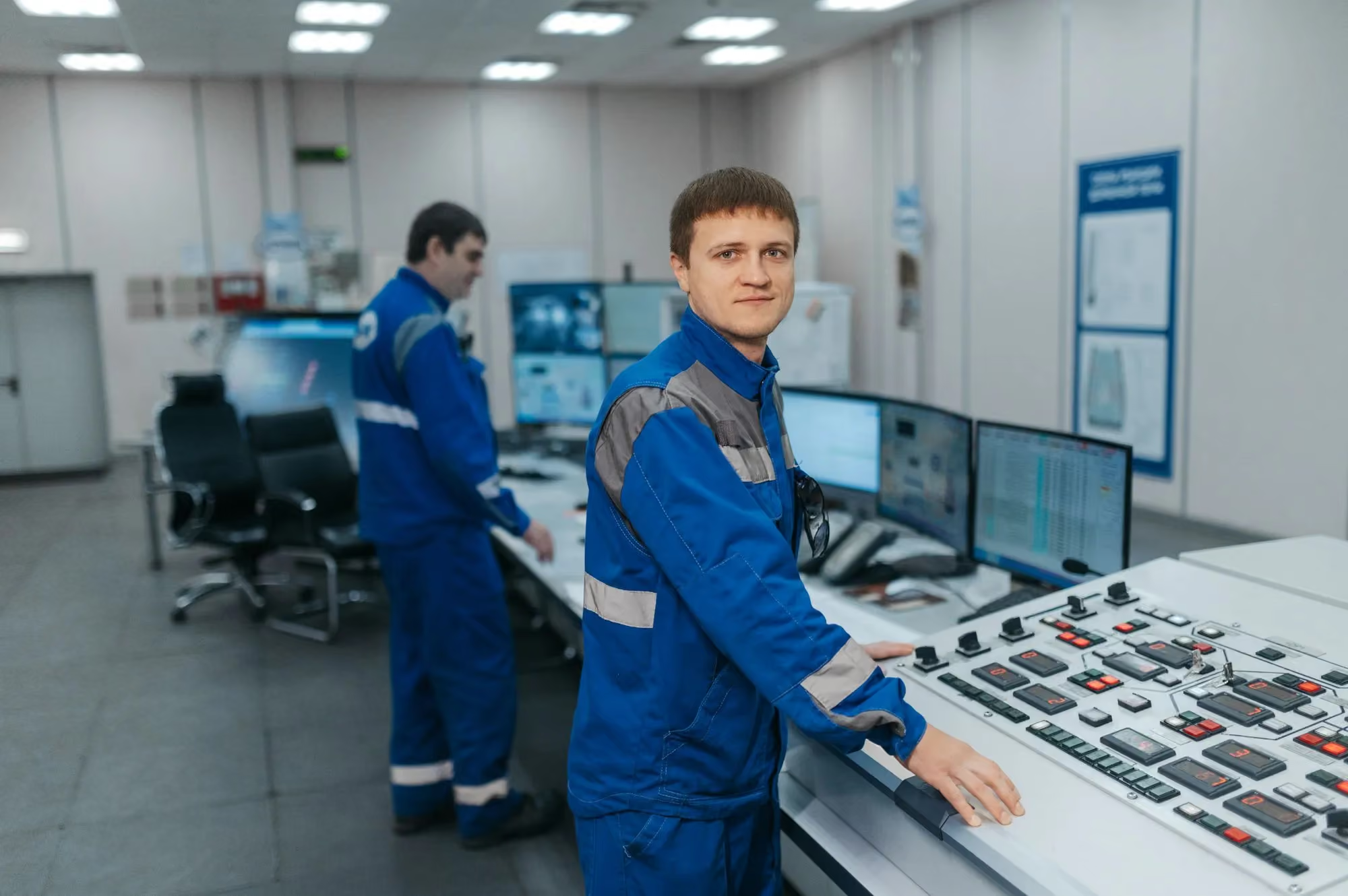
Most of our work goes into lines that are already running. That means the tooling has to fit the controls you have, the signals you already use, and a maintenance window measured in hours rather than days.
We do not ask you to change your PLC stack, your robot brand or your naming conventions. The tooling arrives speaking what the line already speaks.
Brand does not decide the answer. We have fitted behind six-axis arms from every major robot maker and behind two house-built ones, and the job is the same each time: read the interface, match it, prove it on the bench.
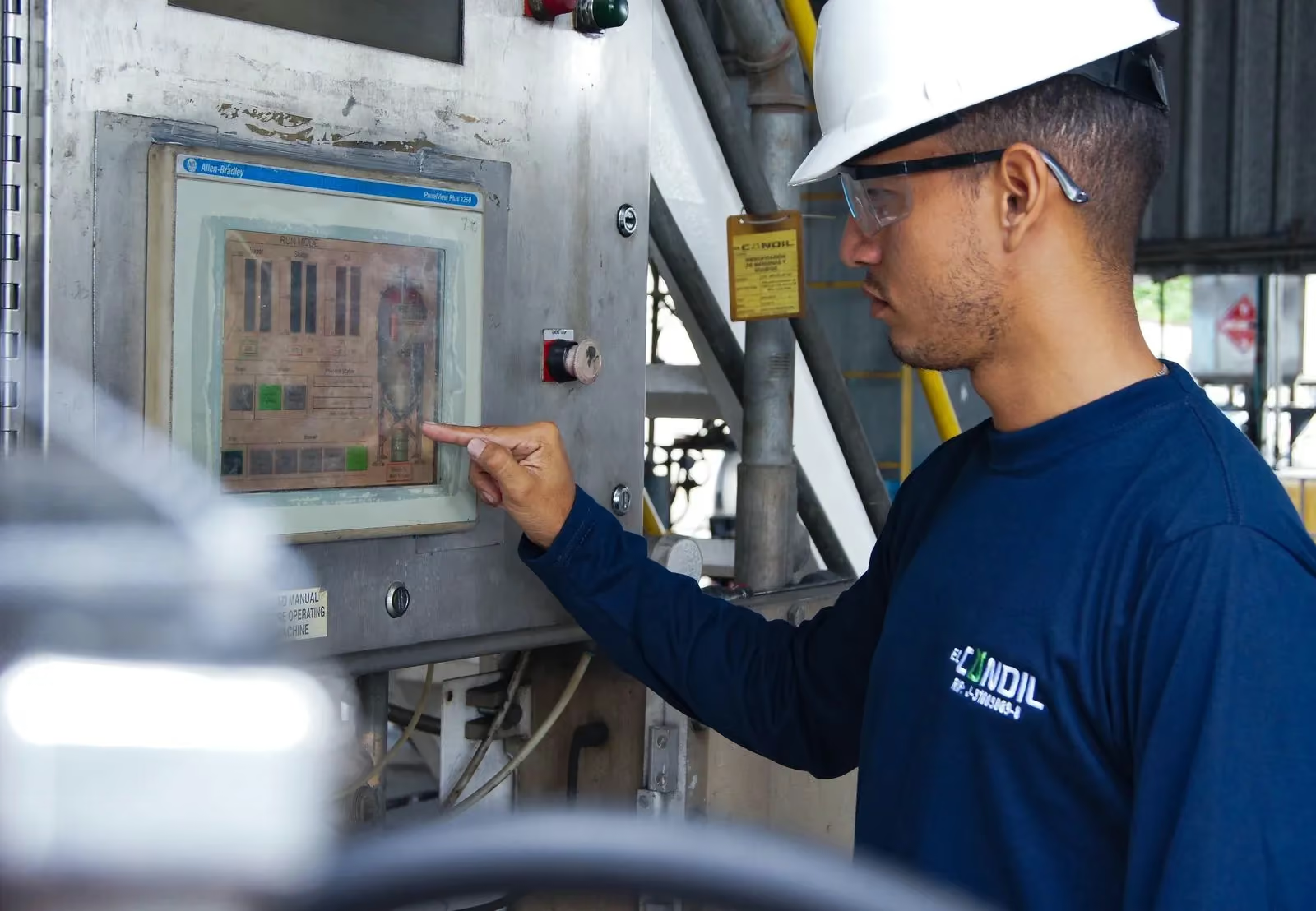
We map the interface before anything is built: signals, safety circuits, addresses and the way your engineers name them. The tooling is then wired and tested against that map on our bench.
The retrofit itself is planned around your window. In most cases the change happens between shifts, and the line runs the next morning without a commissioning day of its own.
The window is agreed in writing, with the point of no return marked on it. Before that point the old tooling goes back on in under an hour. After it, we finish. Nobody has to work out which side of that line they are on at two in the morning.
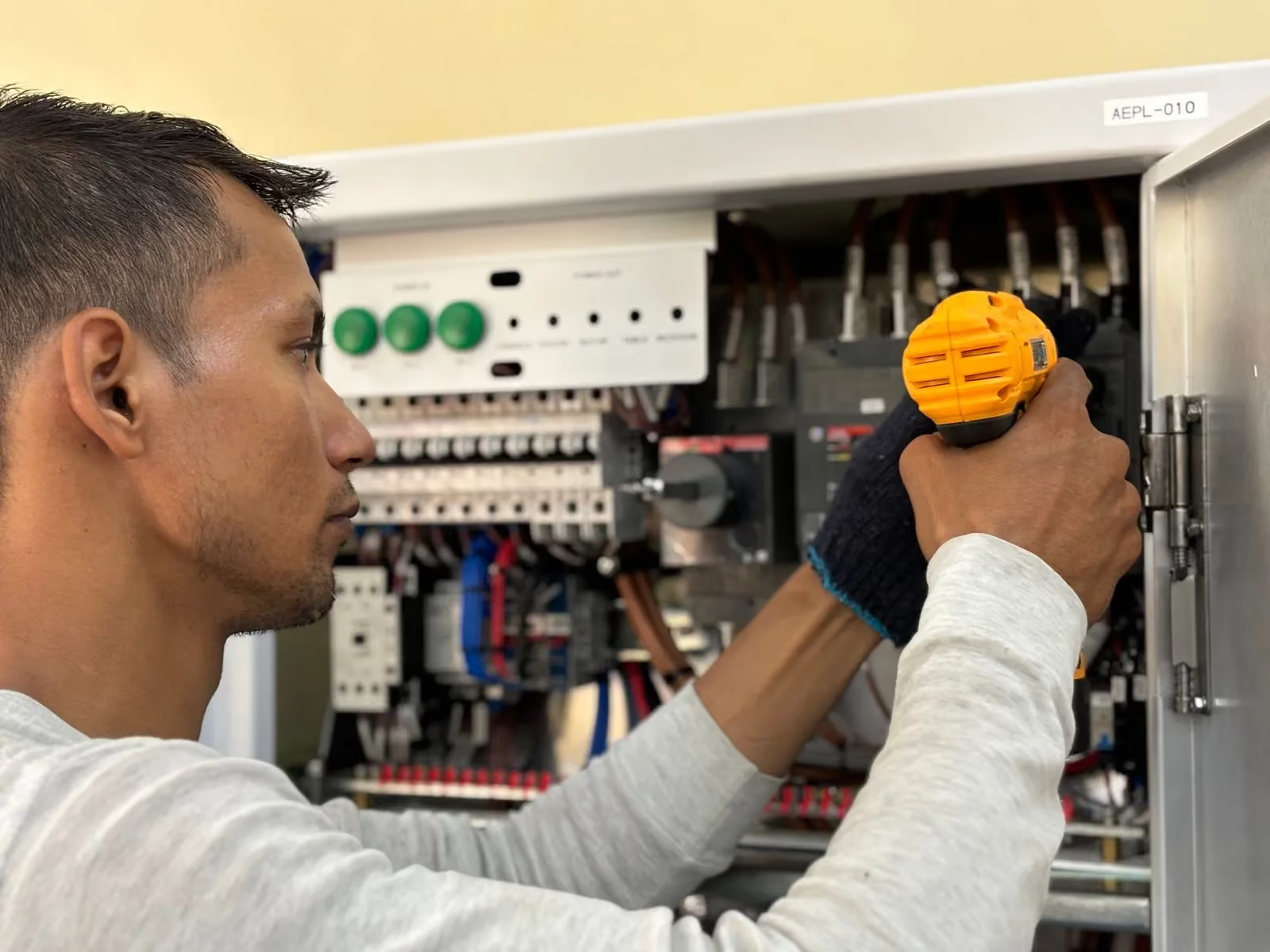
Signals, safety circuits and addressing recorded from your line before anything is ordered.
Tooling wired and run against that map here, so the first connection on your line is not the first test.
A shift-by-shift plan with the window, the fallback, and who is on site for each step.
Drawings and addresses updated to match what is now installed, handed over the same day.
The original tooling, brackets and wiring kept boxed and labelled on site until the new setup has run a full week.
A retrofit touches a certified line, so the safety case is re-checked against what changed and nothing else. Stop categories, interlocks and reach are verified again on the modified cell before it runs production.
You keep your existing documentation set. We update the drawings and the ISO 10218 file to match the retrofit and hand back a pack that matches the line as it now stands.
We do not touch the safety program unless the change requires it, and when it does you see the difference before it is loaded. A retrofit that quietly rewrites a certified safety routine is not a retrofit; it is a new machine wearing the old machine's paperwork.
What engineers usually ask us before they send a part over.
Is the safety documentation included?
.svg)
What happens after the install?
Can this be fitted to a line that is already running?
What do you need from us before quoting?
Do you work with robots we already own?
How do we know which solution we need?


.svg)
.svg)
.svg)
.svg)
.svg)
.svg)
.svg)