Ready to automate your workflow?
Vehicle and component lines
Automated Transportation Systems
Heavy tooling for body and component work, where payload and reach decide the build long before cycle time does.
.svg)
.svg)
Heavy tooling for body and component work, where payload and reach decide the build long before cycle time does.
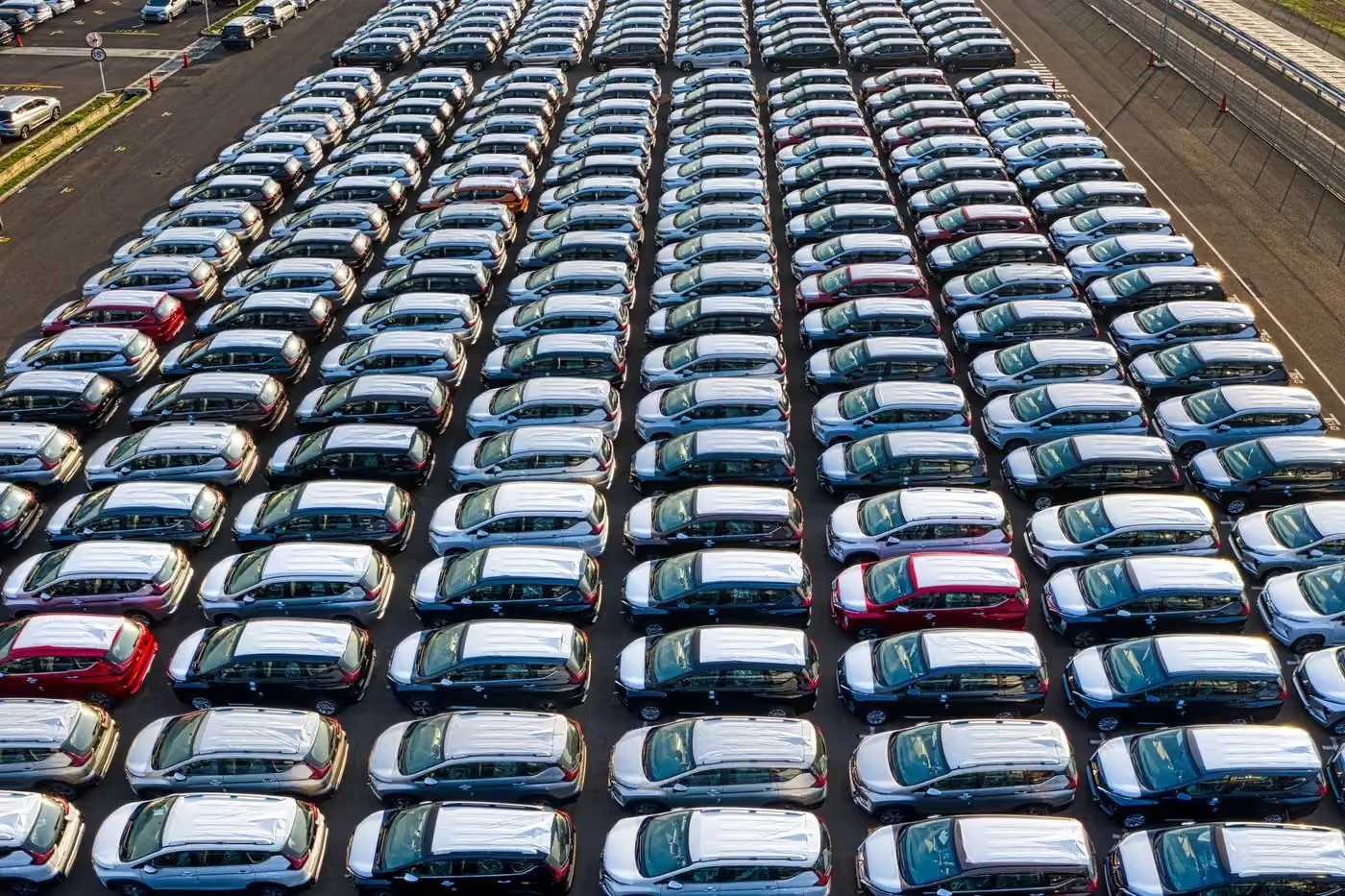
Parts are heavy, awkward and expensive, and they are placed to a tolerance that decides whether the next station can do its job at all.
A station here rarely stands alone. It hands off to the one after it, and the whole run is measured on how many bodies come off the end of the shift.
.svg)

Payload and reach come first and set the size of everything else. A panel that weighs 30 kg on paper needs a tool that can hold it at arm's length without deflecting.
Placement tolerance is inherited from the station after this one. We take that figure from your process sheet rather than proposing our own.
Cycle time matters, but on this floor it is the third constraint, not the first.
Heavy tooling on a six-axis arm, usually as a retrofit into a line that cannot stop for a week. The tooling is wired and proven on our bench before the window opens.
Installation is planned around a shutdown, with the point of no return marked on the plan and the old setup boxed until the new one has run a full week at rate.

Industry
Industry
Industry
What engineers ask us whatever floor they run.
Can one supplier cover several of our plants?
.svg)
Who writes the safety assessment?
Do you visit the site before quoting?
What happens if our part changes next year?
Can you work to our plant's own standard?
Do you work outside these five industries?


.svg)
.svg)
.svg)
.svg)
.svg)
.svg)
.svg)