Ready to automate your workflow?
Precision Robotic Gripping
.svg)

.svg)
.svg)
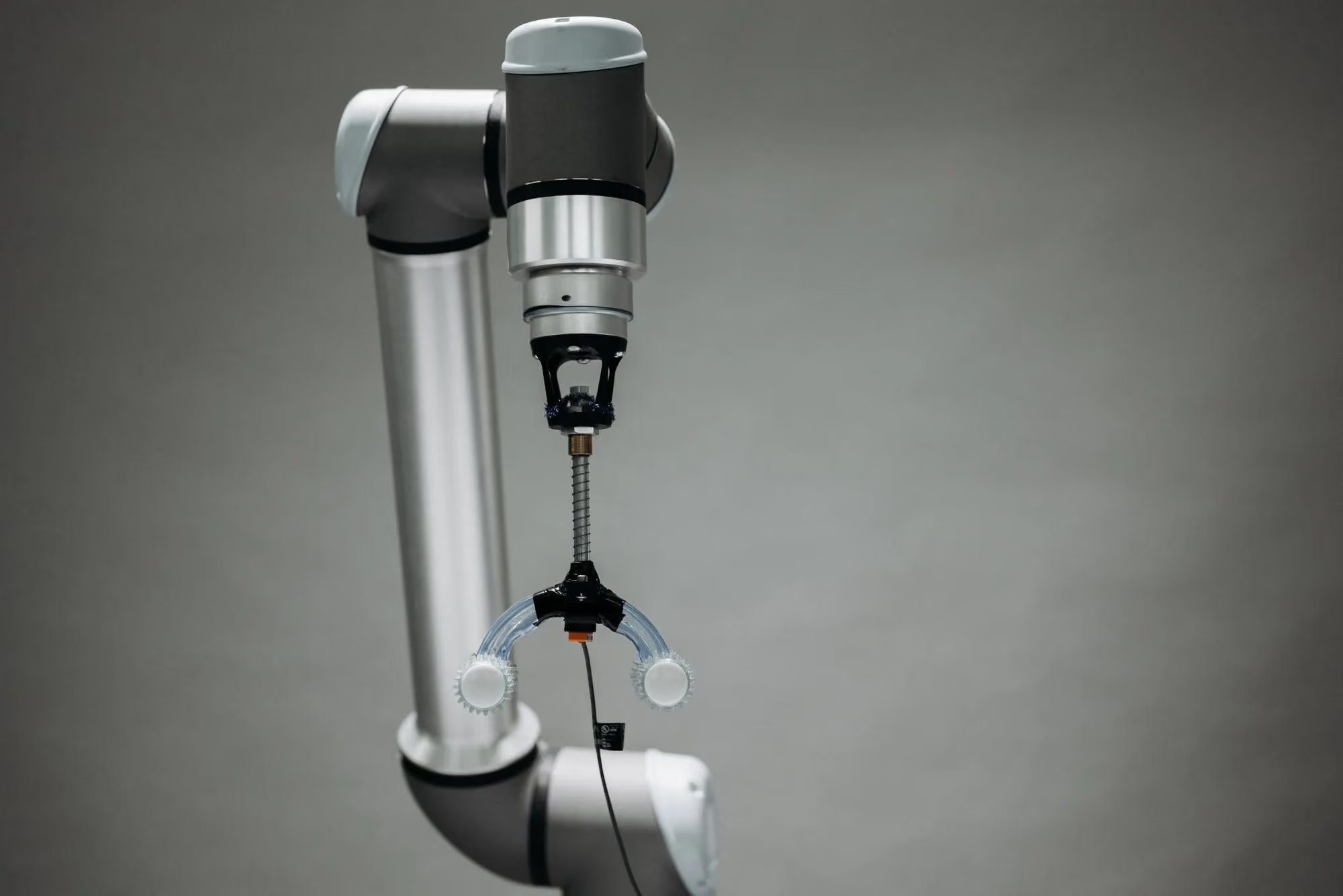
A gripper is the only part of the cell that touches your product, so it decides whether the line runs or stops. Ours are built around the part you are actually picking: its weight, its finish, and how badly it behaves at speed.
Two-finger and three-finger jaws cover most of what comes through a plant. Grip force runs from 20 to 350 N, repeatability holds to ±0.02 mm, and every unit leaves the bench with the cycle count it survived written on the report.
Grippers wear where they touch. Jaws and contact faces are consumables and are priced that way; the actuator behind them outlasts several sets. When your part changes, usually only the faces change and the cell keeps running.
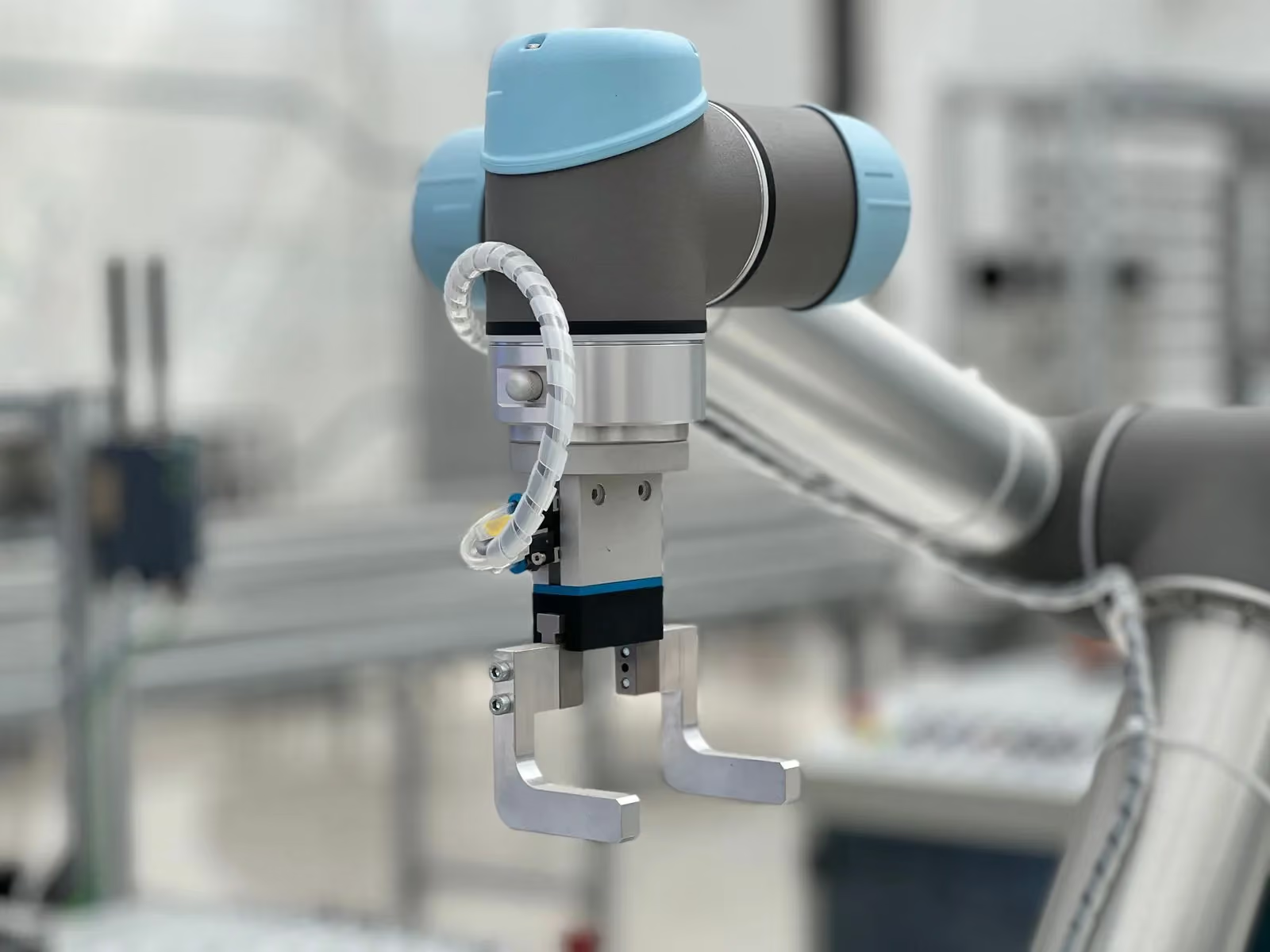
We start from a sample or a drawing of the part, not from a product list. Jaw geometry, contact material and stroke are chosen against that part, then proven on a rig that repeats your actual cycle before anything ships.
Where the part is delicate, painted or still warm, the contact face changes rather than the whole gripper. That keeps the interface, the spares and the service intervals the same across a plant that handles very different products.
Payload is sized to the margin the application needs, not the margin that looks generous on paper. A gripper holding a wet casting at speed is specified differently from one placing a dry component into a fixture, even when the two parts weigh the same.
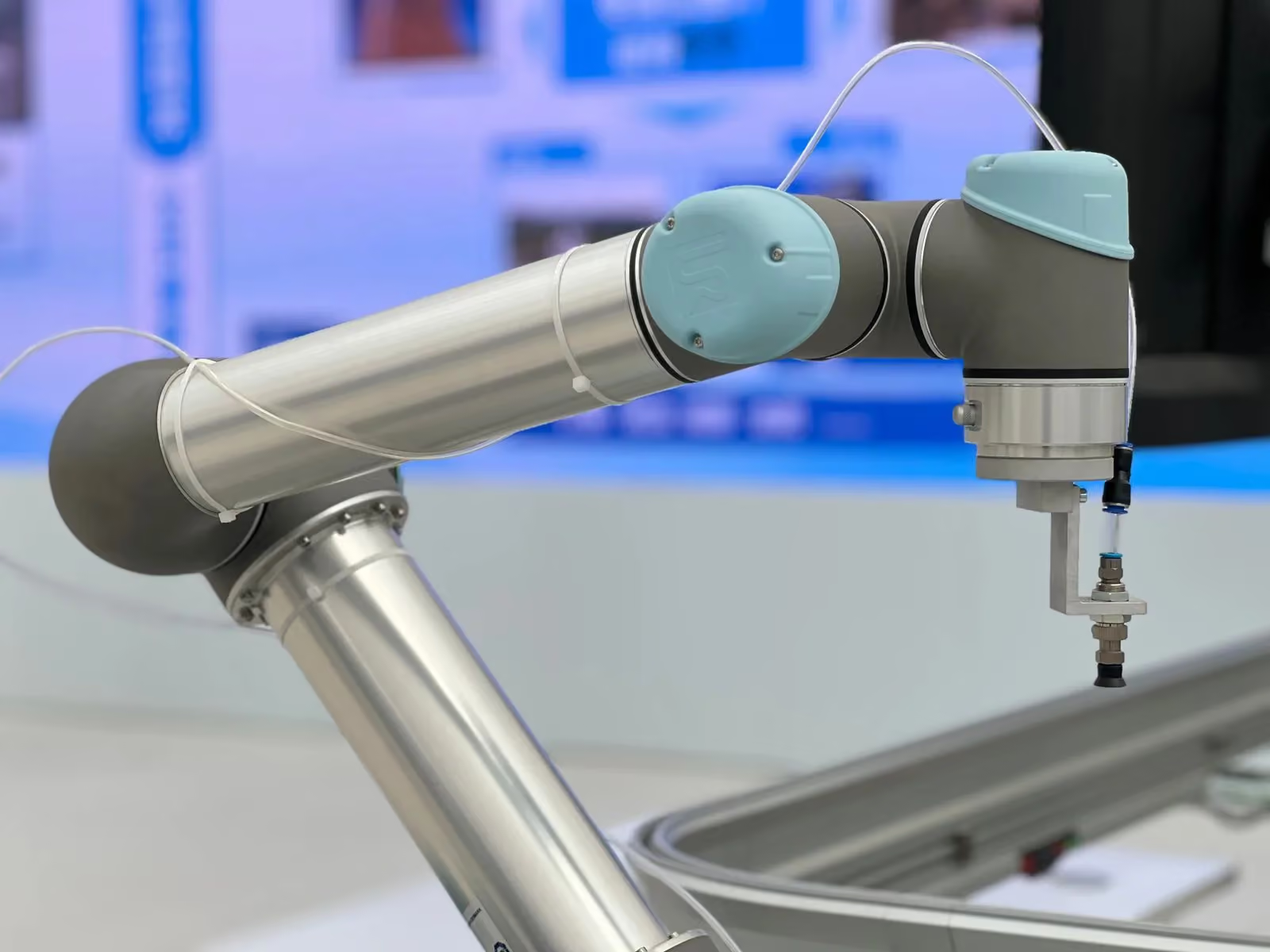
Sealed actuator sized to your payload, with the mounting pattern cut for your robot flange.
Contact geometry and material chosen for the part, with a spare set in the same crate.
The rig results: grip force measured, repeatability measured, cycles run before shipping.
Wiring, signals and the ISO 10218 documentation your integrator needs on day one.
Torque figures, alignment marks, and the checks worth running after the first hundred cycles.
Every gripper runs a full cycle test before it is packed. We measure grip force and repeatability on the rig, run it to the cycle count agreed in the order, and ship the numbers with the unit rather than a specification sheet.
Safety documentation is part of the delivery, not an extra. The ISO 10218 file, the declaration and the wiring interface travel with the gripper, so the cell can be signed off without waiting on paperwork from us.
Nothing leaves on a promise. If a unit misses its numbers on the rig it goes back to the bench rather than into the crate, and you get the revised date the same day rather than on the delivery that does not arrive.
What engineers usually ask us before they send a part over.
Is the safety documentation included?
.svg)
What happens after the install?
Can this be fitted to a line that is already running?
What do you need from us before quoting?
Do you work with robots we already own?
How do we know which solution we need?


.svg)
.svg)
.svg)
.svg)
.svg)
.svg)
.svg)