Ready to automate your workflow?
Grading and packing
Smart Agriculture Technologies
Handling for produce and packing lines, with faces cut for soft, irregular parts of which no two are quite alike.
.svg)
.svg)
Handling for produce and packing lines, with faces cut for soft, irregular parts of which no two are quite alike.
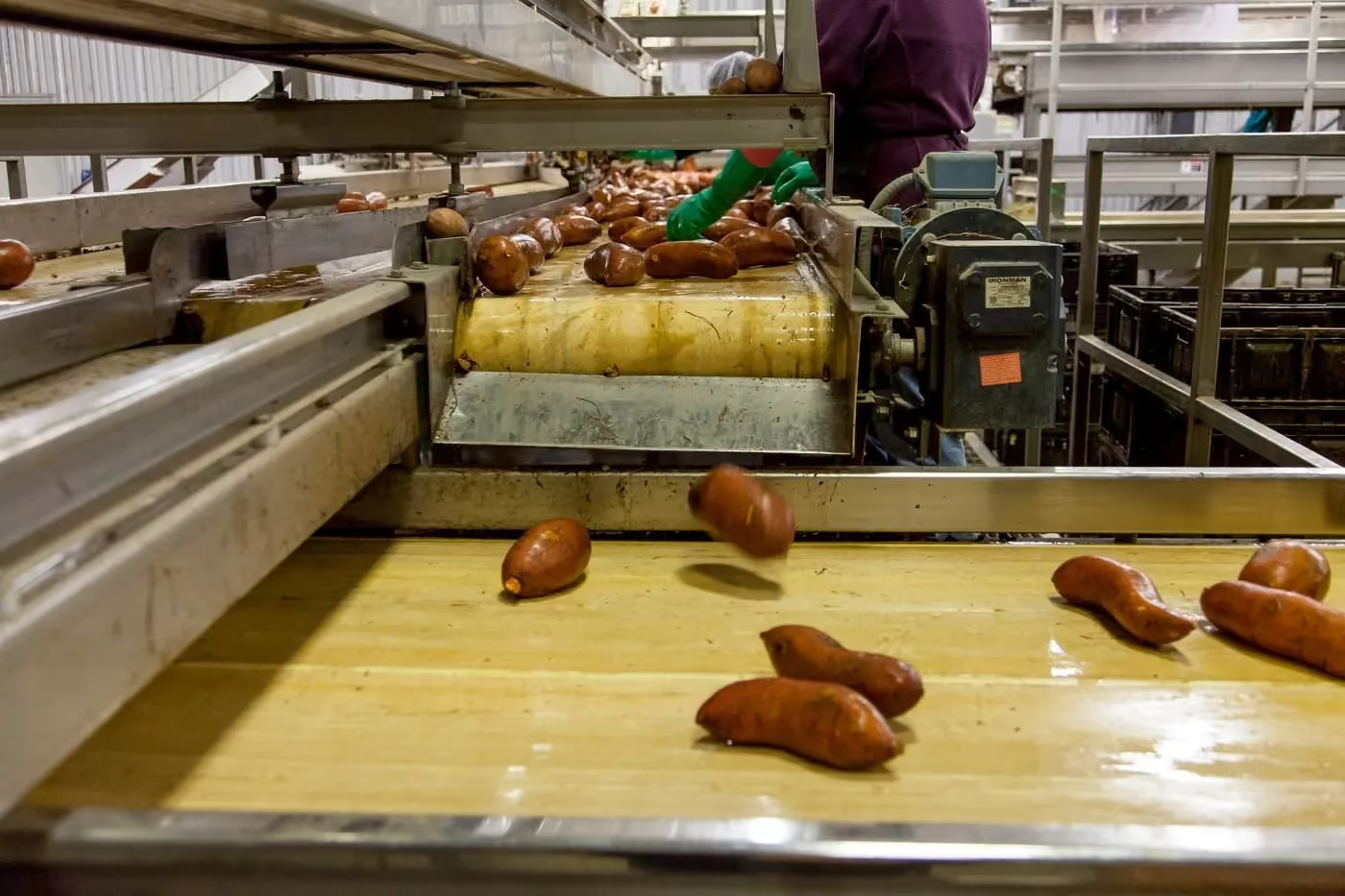
Produce arrives wet, graded or ungraded, and no two pieces the same size. The station moves it from a belt into a tray, a crate or a bag without bruising it.
The work is seasonal and the line runs hard for a few weeks. Downtime inside that window costs more than the station did.
.svg)

Variability sets the design. The tool has to hold the smallest and the largest piece in a grade without a setup change, which means compliant contact faces rather than a fixed jaw geometry.
Then the wash-down. These lines are hosed daily, so the body is sealed and the faces are food-safe and replaceable at the station.
Grip force is set low and proven on your product, because the failure here is a bruise rather than a drop.
Compliant tooling on a fast arm, fed by transfer with buffering, so a stoppage downstream does not back the crop up on the belt.
A full spare set of contact faces ships in the crate and changes inside a break rather than a shutdown. Before the season starts we run the line at rate with your product.

Industry
Industry
Industry
What engineers ask us whatever floor they run.
Can one supplier cover several of our plants?
.svg)
Who writes the safety assessment?
Do you visit the site before quoting?
What happens if our part changes next year?
Can you work to our plant's own standard?
Do you work outside these five industries?


.svg)
.svg)
.svg)
.svg)
.svg)
.svg)
.svg)