Ready to automate your workflow?
Cleanroom handling
Robotic Systems in Healthcare
Sealed tooling and non-marking contact faces for laboratories and device assembly, where the wash-down schedule decides the material before anything else.
.svg)
.svg)
Sealed tooling and non-marking contact faces for laboratories and device assembly, where the wash-down schedule decides the material before anything else.

The station handles small, light, expensive parts in a room where the air is controlled. Throughput is rarely the problem. Contamination, traceability and consistency are.
Typical work is device assembly, tray loading and sample handling, where the same movement has to happen identically every time and be recorded when it does.
.svg)

The wash-down schedule comes first. It decides the seal rating, the finish on every exposed surface, and which contact material can be used at all.
After that, the standard the room is audited to. What we build has to survive the cleaning regime and leave nothing behind, which rules out most of the elastomers used elsewhere in this list.
Parts are light, so payload is almost never the constraint. Repeatability and non-marking contact are.
Sealed tooling on a compact arm, with contact faces in a material chosen against your cleaning agent rather than against ours.
Every unit ships with its material declaration alongside the ISO 10218 file, so the validation pack is complete on the day it arrives instead of six weeks later.

Industry
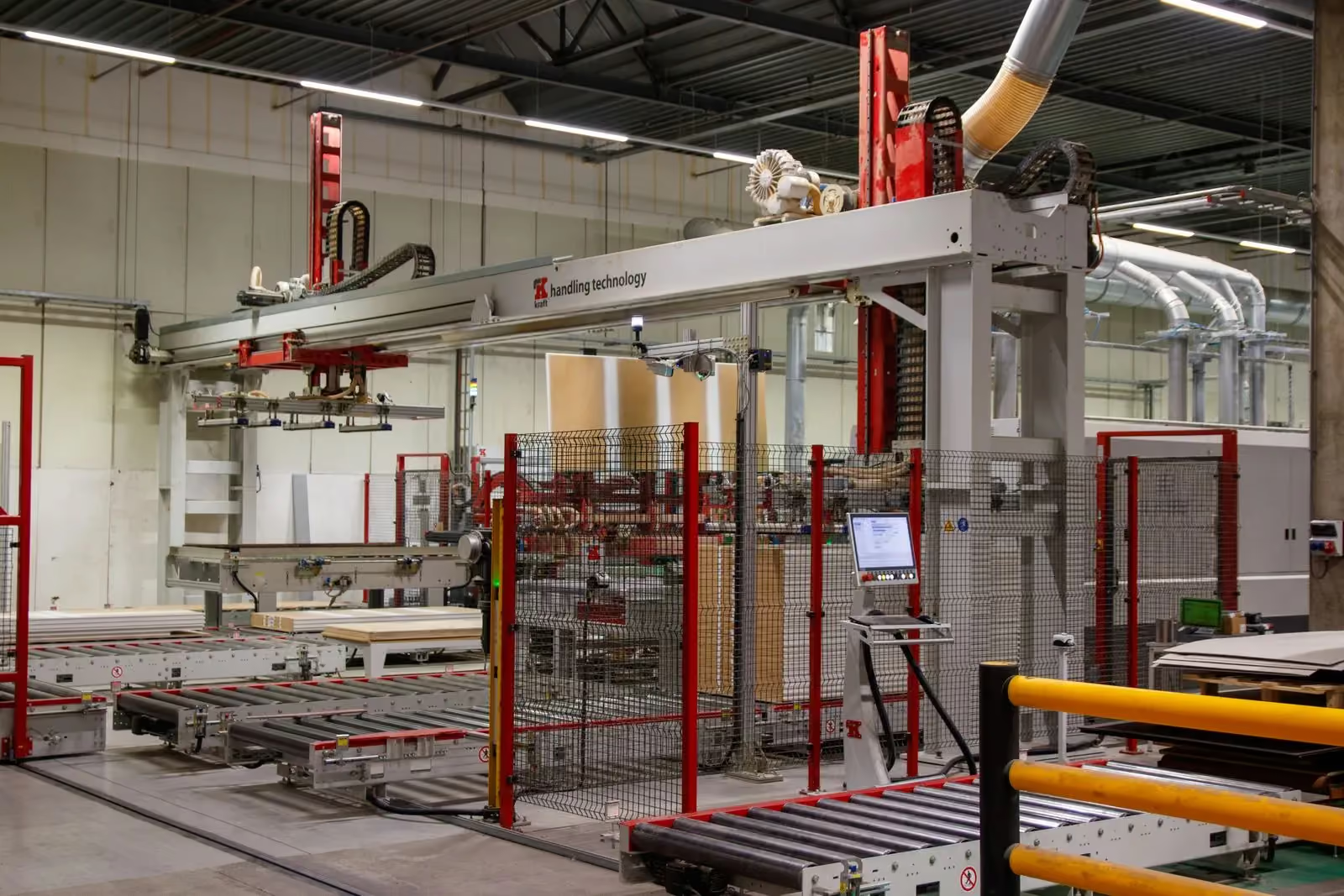
Industry
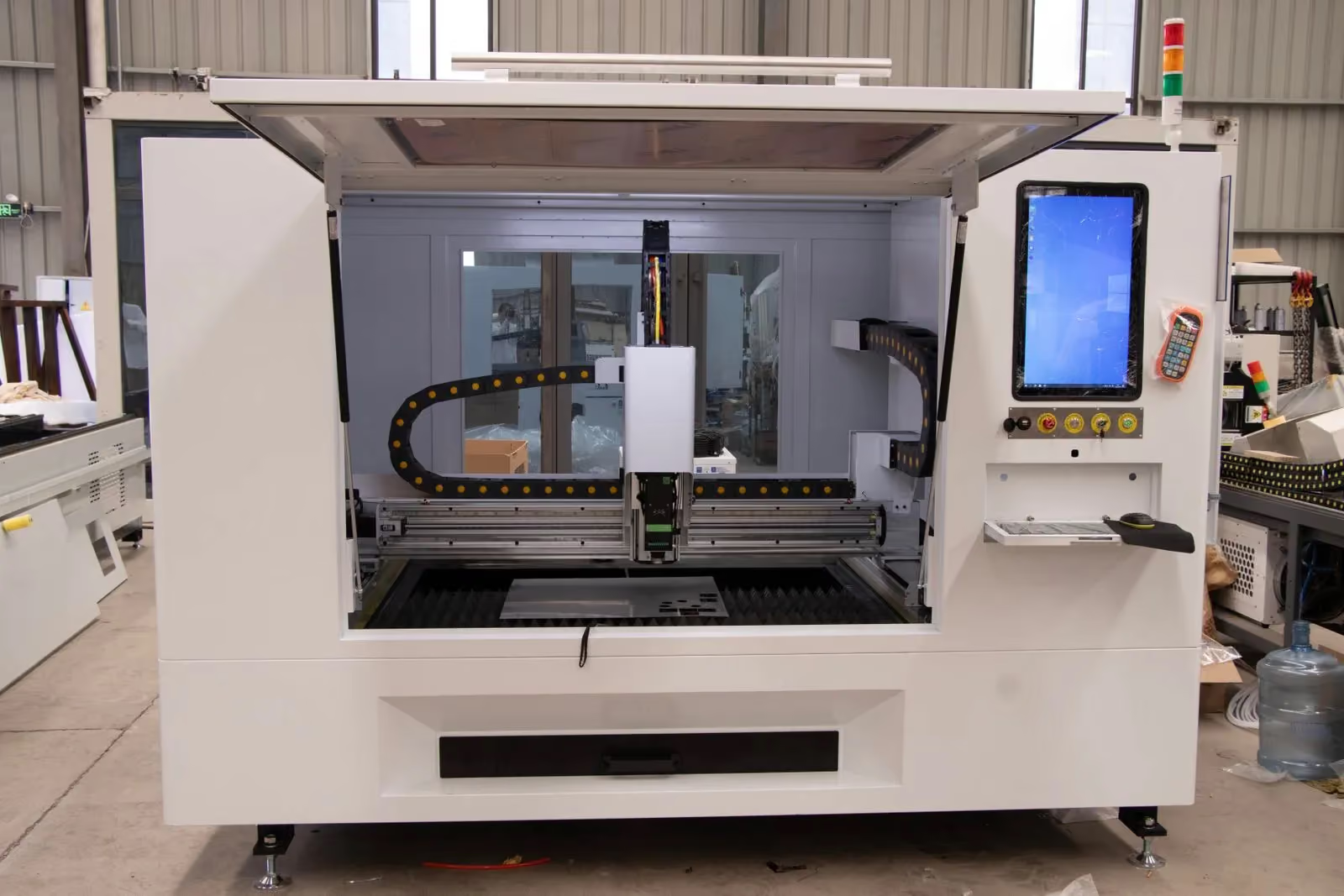
Industry
What engineers ask us whatever floor they run.
Can one supplier cover several of our plants?
.svg)
Who writes the safety assessment?
Do you visit the site before quoting?
What happens if our part changes next year?
Can you work to our plant's own standard?
Do you work outside these five industries?


.svg)
.svg)
.svg)
.svg)
.svg)
.svg)
.svg)