.svg)
.svg)
Ready to automate your workflow?
ISO 10218 is usually read as a robot standard, and most of it is. But the moment a tool is bolted to the wrist, the robot stops being the whole machine. A good part of the standard applies to what is on the end of the arm, and to the paperwork that has to travel with it.
This is what that means in practice for a gripper or a piece of tooling, and what we put in the crate so your safety engineer is not left to reconstruct it.
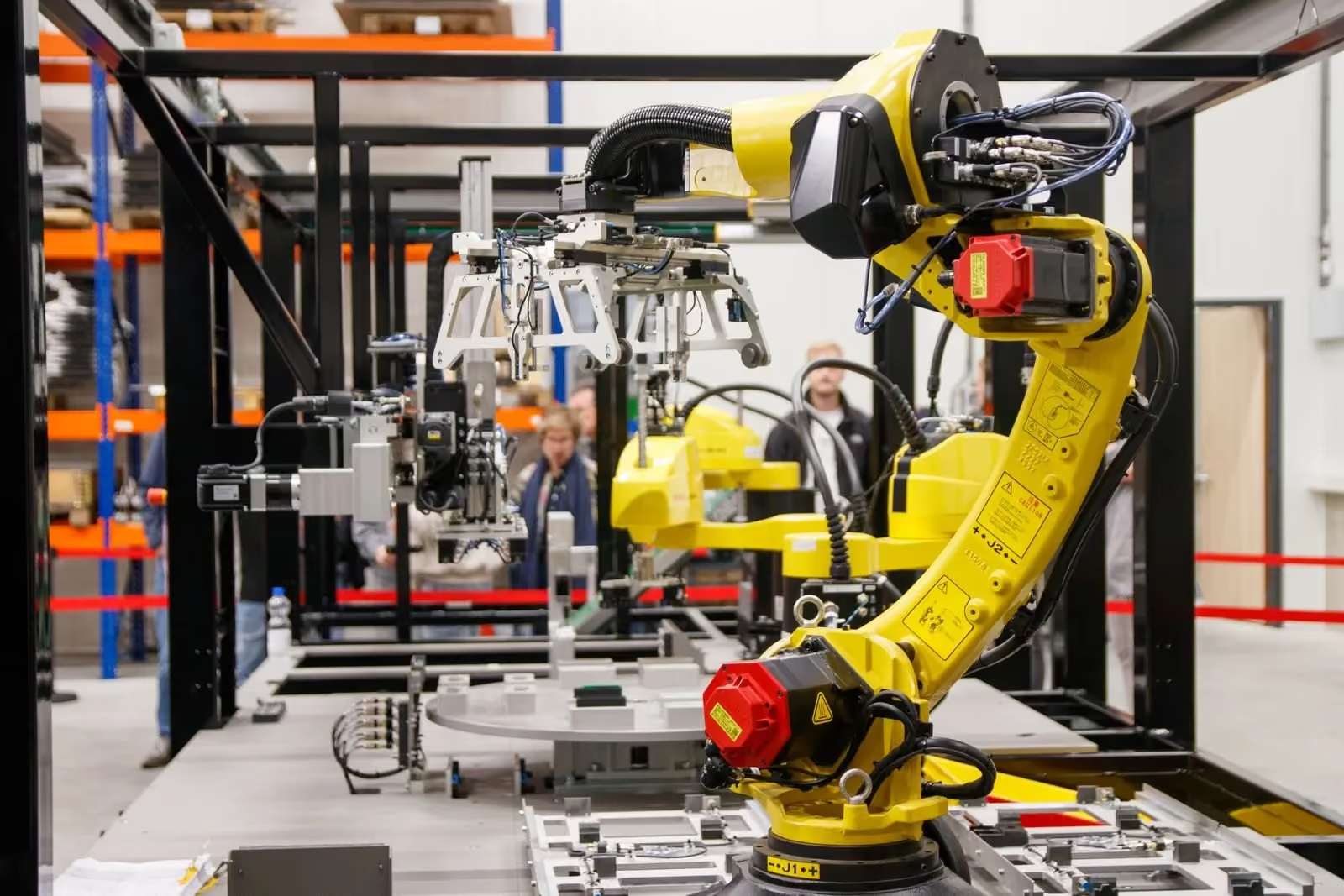
The tool is part of the machine
Bolt a gripper to a robot and the combination is a new machine. ISO 10218 treats it that way, which means the tool's behaviour on power loss, air loss and a dropped part is in scope, not just the arm's.
A robot can be certified on its own. The cell it becomes part of cannot, until someone has looked at the whole thing — the arm, the tool, the fixture and the people who work around it.
The robot arrives certified. The cell it becomes part of is not, until someone writes the assessment for it.
The assessment covers the altered area
A risk assessment written for the robot alone misses the most common hazards. The ones we see most often are:
- a heavy part released early, on loss of air or a control fault;
- a pinch point between the jaw and the fixture;
- an operator reaching in to clear a jam while the tool is still powered;
- a sharp or hot part carried past a place where people stand.
We write the assessment for the whole area the work changes, including the parts of the line either side of the station.
Decide what happens when the air goes
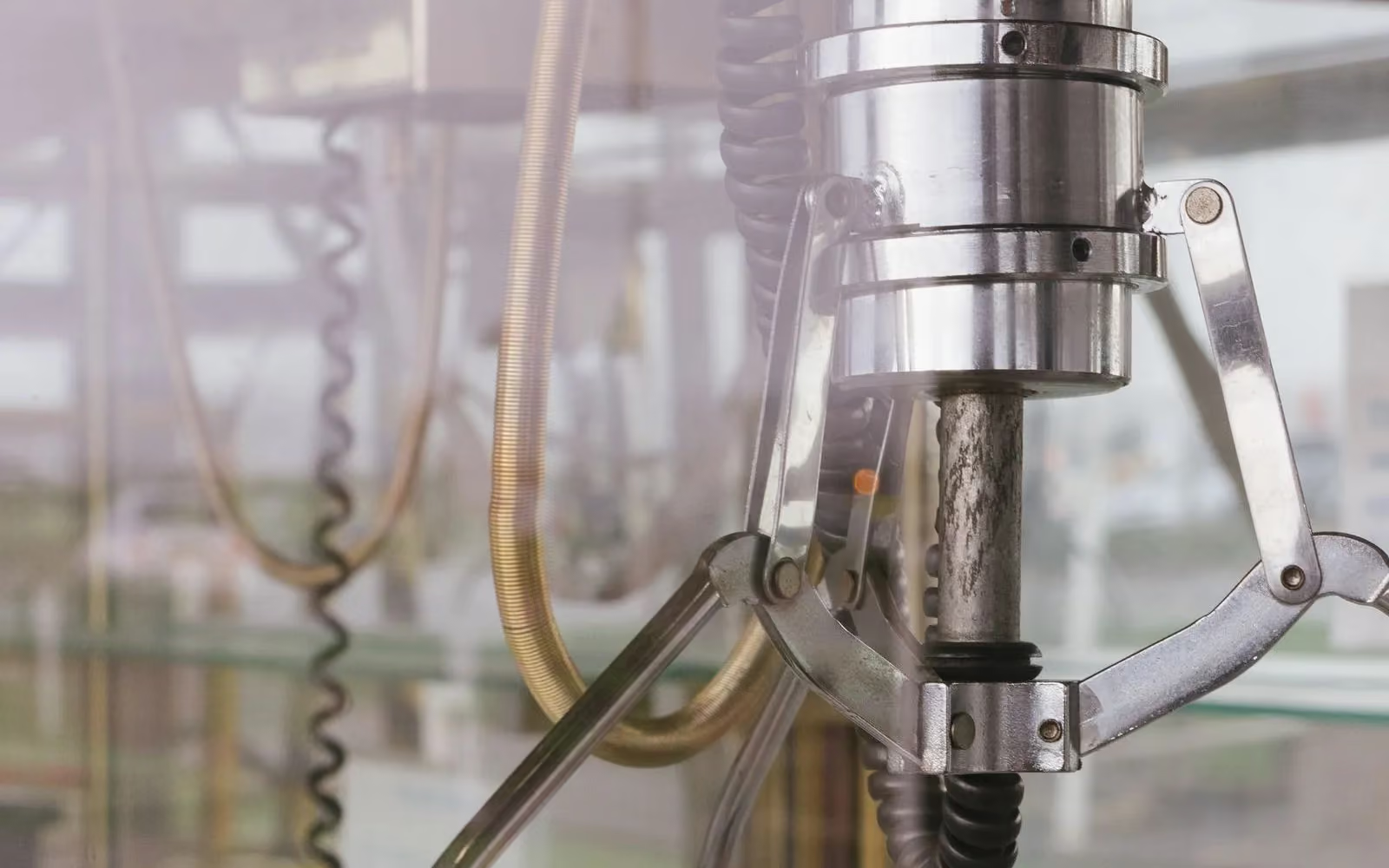
Every tool has to have a defined behaviour on loss of power or air, and that behaviour has to be chosen, not inherited from whatever valve was in stock. For heavy parts, that usually means a gripper that holds on loss of pressure until the station is safe.
For light parts over a guarded area, releasing may be acceptable. Either way, the choice is written into the assessment and tested before the unit ships.
Grip loss has its own signal
Every gripper we ship reports grip loss on its own output rather than folding it into a general fault. Most lines wire that to stop the station immediately. It costs one input, and it is the difference between a stop and a dropped part.
What ships in the crate
The paperwork travels with the unit. None of it is sent on later or charged separately:
- the ISO 10218 file for the tool, including the risk assessment for the altered area;
- the declaration signed for that serial number;
- the wiring interface, with signal names matched to your line;
- the measured test sheet from the rig run before crating.
Your safety engineer should be able to sign off the station from what is in the crate, without a single follow-up email.
Final thoughts
Treat the tool as part of the machine, assess the whole area it changes, decide deliberately what happens when the air goes, and ship the paperwork with the unit. None of it is complicated. It only becomes difficult when it is left until after the station is installed.


.svg)
.svg)
.svg)
.svg)
.svg)
.svg)
.svg)