.svg)
.svg)
Ready to automate your workflow?
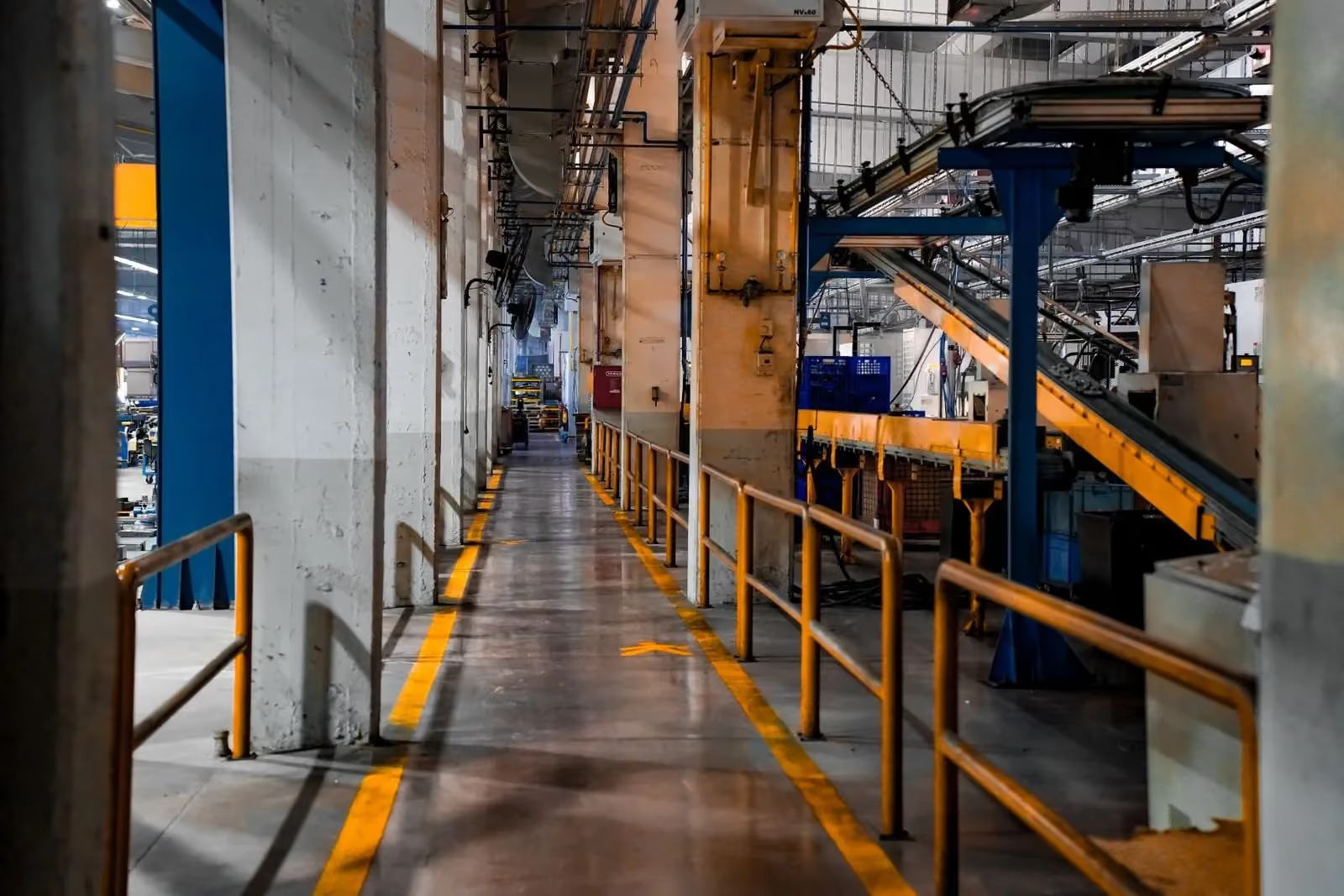
Transfer rail looks like the simplest part of a cell. It moves work from one station to the next, and on a drawing it is a pair of lines with carriers between them. On the floor, it decides whether the rest of the cell ever reaches its rate.
The reason is buffering. A rail that is sized well keeps every station working through the small stoppages that happen every shift. A rail sized badly either starves the line or fills the floor with carriers nobody needed.
Buffering is the point
Transfer between stations is easy. Keeping the station after a stoppage fed, and the station before it from jamming, is the actual job. That is buffering, and it is where most rail is either undersized or oversized.
Undersized rail makes every short stop visible at the end of the line. Oversized rail hides nothing a smaller one would not, and costs floor space, carriers and wear parts for as long as the cell runs.
How we size it
The rail runs at the rate the slowest station can take. The number of carriers comes out of four steps:
- Collect the cycle time of every station the rail connects;
- Add the stoppages each one tends to have — tool changes, jams, material top-ups;
- Find the longest typical stop upstream of each station;
- Size the carriers so that stop does not starve the station downstream.
The inputs come from your line, not from a table. Where stoppage data does not exist, we log the stations for a week before the rail is drawn.
A rail longer than the buffer needs is floor space, carriers and wear parts you pay for twice.
Longer is not safer
It is tempting to add carriers just in case. The number of carriers is calculated, written on the drawing, and that is the length that gets cut. Anything more adds floor space, carriers and wear parts without keeping a single station fed for longer.
If the calculation shows a buffer the floor cannot fit, the answer is usually to shorten the longest stoppage, not to lengthen the rail.
Pitch and positioning
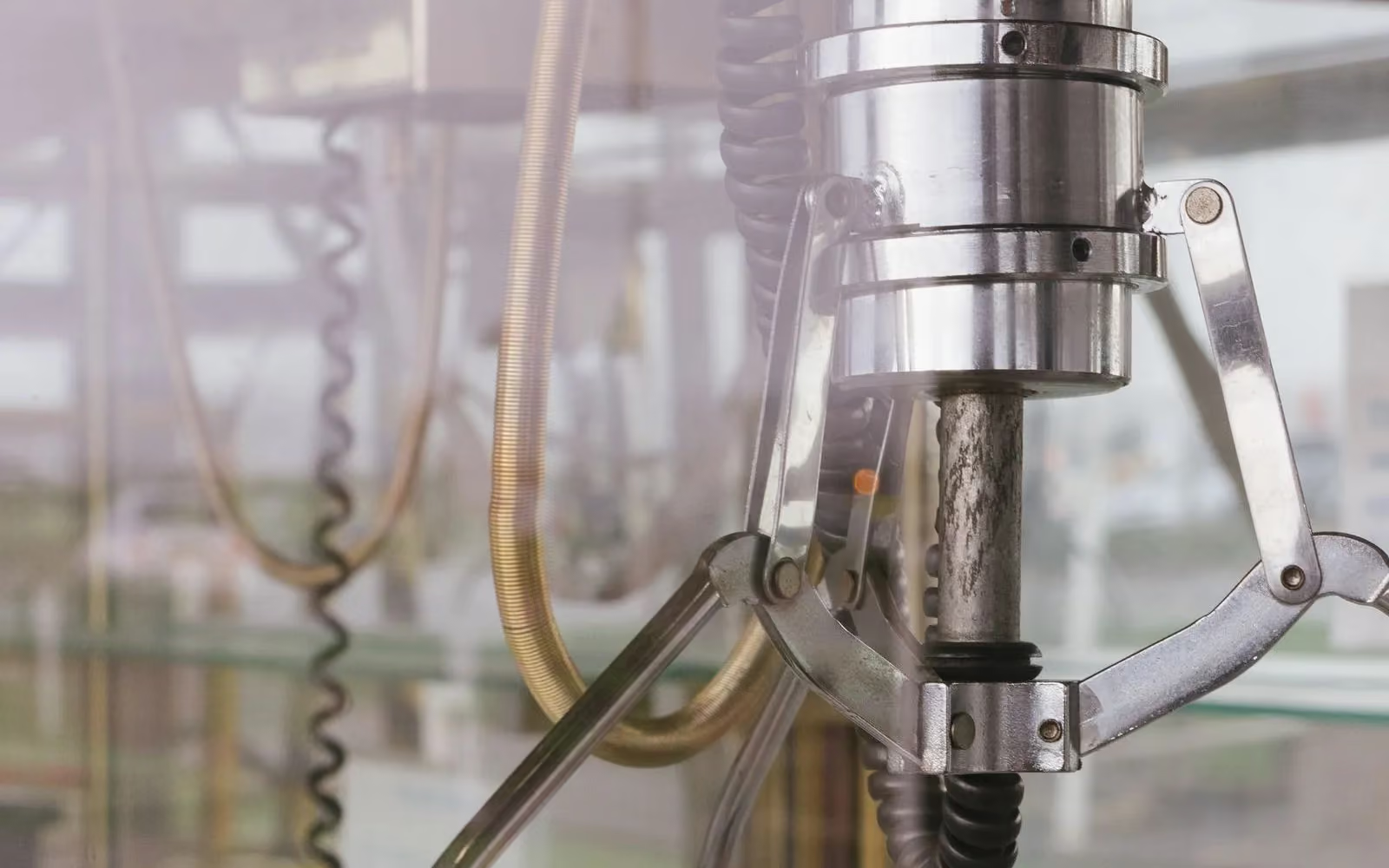
Pitch is set by the largest part the rail carries and the reach of the stations that pick from it. Stop position is set by the tolerance the next tool needs to find the part. Both are agreed with the station designs, not after them, so the carriers arrive where the grippers expect them.
Match what is already there
Where an existing conveyor stays in service, the rail meets its height and hand-off rather than asking you to move it. The survey that sets those figures happens before the rail is drawn, and the drawing you get back matches what was installed.
Final thoughts
Size the rail from the slowest station and its real stoppages, cut it to the calculated length, and match it to what is already on the floor. A rail built that way is the part of the cell nobody talks about — which is exactly what it should be.


.svg)
.svg)
.svg)
.svg)
.svg)
.svg)
.svg)