How a chip is designed, from sketch to silicon
The processor in your phone started as a spreadsheet, a drawing and a lot of arguments. Here is the route it took.
AL
Ada Lindqvist
Technology editor

Every chip starts with a list of wishes. Make it faster than last year. Use less battery. Fit in the same space. Cost no more to make. The design team spends months arguing about which wishes matter most, because they cannot all be granted at once.
Only when that list is agreed does anyone start drawing. Even then, the drawing is not a picture of the chip. It is a description of what the chip should do, written in a special programming language.
Step one: describe the behaviour
Engineers write code that describes every part of the chip: how numbers are added, how memory is read, how the parts talk to each other. This code can run on ordinary computers as a simulation, which is how most bugs are found.
A chip is a city drawn so small that the roads are narrower than a virus.
Step two: turn behaviour into a map
Software then converts that description into billions of tiny switches and the wires between them. Placing them is like planning a city: busy districts need short roads, and nothing can overlap. The finished map is checked again and again for timing and heat.
Step three: make it for real
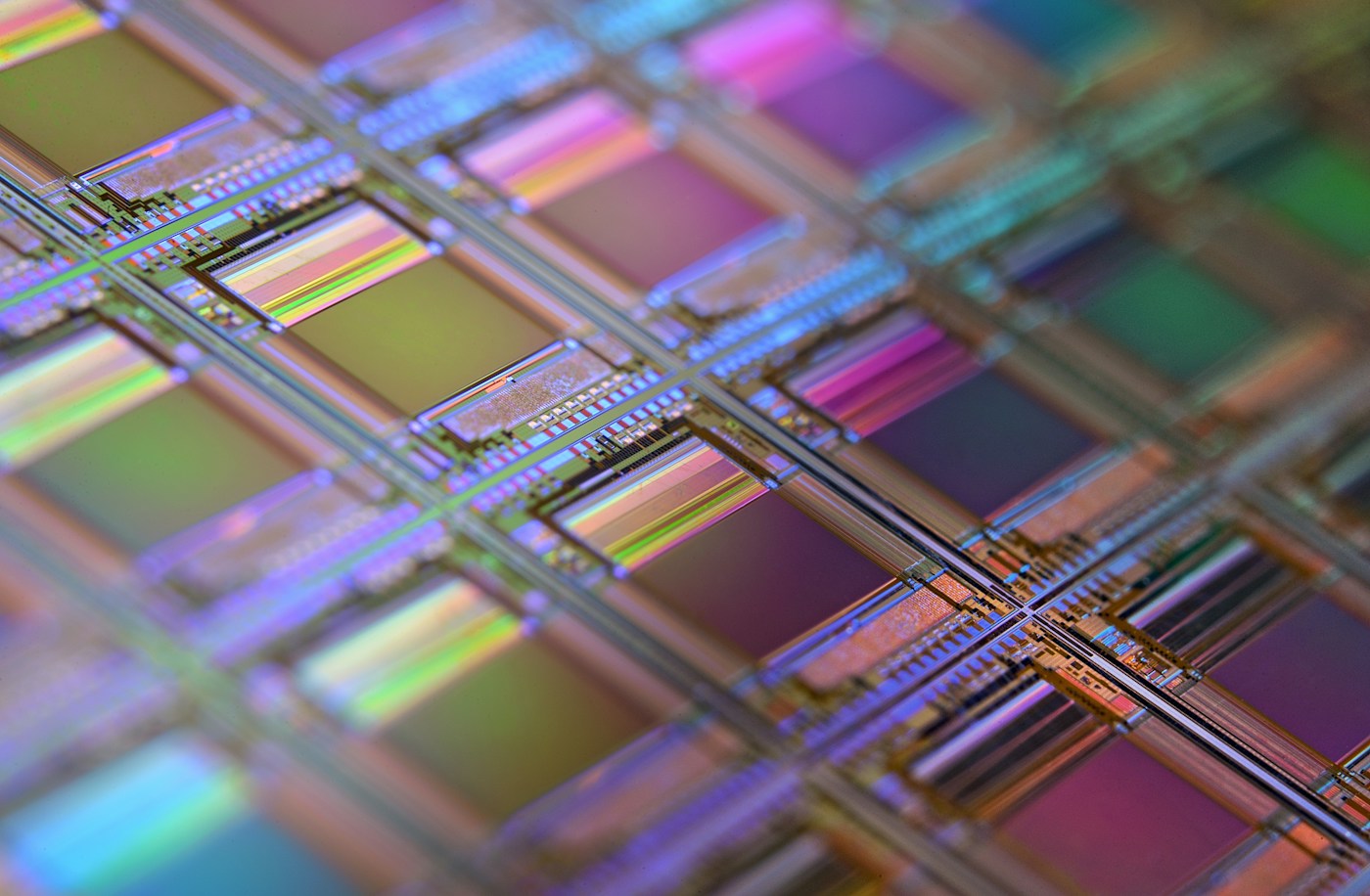
The map is printed onto masks, glass plates that act like stencils.
Light shines through the masks onto silicon wafers, layer by layer.
A single wafer passes through hundreds of steps over about three months.
Each wafer is cut into chips, which are tested one by one.
The first chips back from the factory rarely work perfectly. Teams plan for this, keeping a few small fixes ready for the second round.
Why it takes years
From first wish list to a chip in your hand usually takes three to four years. That is why the phone you buy today contains decisions made before anyone knew what the phone would look like.
Where the next chips come from
Making transistors smaller is getting harder and more expensive every year. So designers are finding other ways to improve: stacking layers of chips on top of each other, splitting one large chip into several smaller ones that sit side by side, and building special circuits for common jobs like processing photos.
That last idea explains a lot about modern phones. A large share of the chip is no longer a general-purpose processor. It is a collection of specialists, each very good at one task and asleep the rest of the time, which saves battery.
The next time your phone recognises a face in a photo instantly, it is likely that a small, dedicated part of the chip was designed years ago for that exact moment, and did nothing else all day.
“A chip is a city drawn so small that the roads are narrower than a virus.”
— Ada Lindqvist
AL
Written by
Ada Lindqvist
Ada explains how everyday technology works. She was a hardware engineer for a decade before switching to writing.

