%20(1).svg)
.svg)




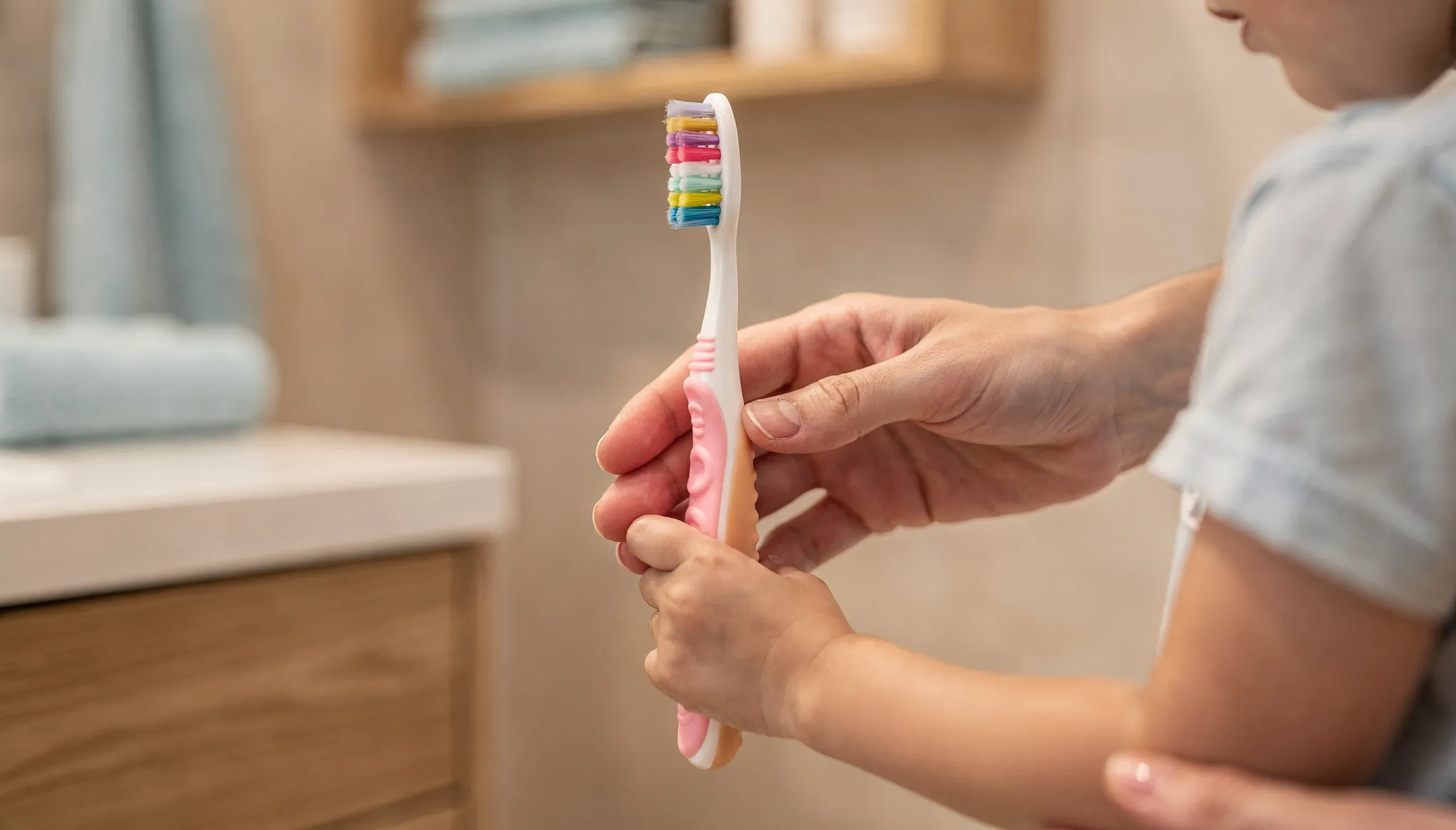
A Parent’s Guide to Children’s Oral Hygiene.
Why Early Oral Hygiene Matters
Good oral health begins long before a child’s first tooth appears. Establishing healthy habits early helps prevent tooth decay, supports proper speech development, and builds a positive attitude toward dental care.
When Should You Start Cleaning Your Child’s Mouth?
Oral care should begin even before teeth erupt.
Before teeth appear:
Use a soft, damp cloth or infant gum wipe to gently clean your baby’s gums after feedings.
When the first tooth appears:
Start brushing with a soft-bristled baby toothbrush and a tiny smear of fluoride toothpaste (about the size of a grain of rice).
By age 3:
Increase toothpaste to a pea-sized amount and encourage your child to learn brushing with supervision.
Building Healthy Brushing Habits
Consistency is key to lifelong dental health.
Tips for parents:
- Brush your child’s teeth twice a day (morning and before bedtime).
- Supervise brushing until at least age 6–7.
- Make brushing fun with songs, timers, or colorful toothbrushes.
- Lead by example—children copy what they see.
The Role of Diet in Oral Health
What your child eats has a direct impact on their teeth.
Limit:
- Sugary snacks and drinks
- Sticky candies
- Frequent juice consumption
Encourage:
- Water instead of sugary beverages
- Fresh fruits and vegetables
- Dairy products rich in calcium
When to Visit the Dentist
Children should have their first dental visit by their first birthday or within six months of the first tooth appearing.
Early visits help:
- Detect potential issues early
- Prevent cavities
- Familiarize children with the dental environment
- Give parents guidance on proper care
Common Mistakes Parents Should Avoid
- Waiting too long to start brushing
- Using too much toothpaste
- Letting children sleep with a bottle of milk or juice
- Skipping regular dental checkups
Final Thoughts
Starting oral hygiene early sets the foundation for a lifetime of healthy smiles. With proper guidance, consistent routines, and regular dental visits, parents can help their children grow up cavity-free and confident about their dental health.